


From $10,000 to $1 Million: Is VONG the Ultimate Wealth Accelerator or a Statistical Mirage?
1. Introduction: The Lure of the Seven-Figure Single Investment
In the modern theater of asset management, few narratives are as seductive as the “millionaire dream” the prospect that a single, calculated $10,000 investment could, through the quiet alchemy of compounding, solve the riddle of retirement. While the S&P 500 remains the benchmark for retail aspirations, its historical 10% annualized return requires a nearly half-century commitment to reach the seven-figure mark.
It is no wonder, then, that the Vanguard Russell 1000 Growth ETF (VONG) has captured the collective imagination of the investor class. By isolating the growth style premium, VONG has historically transformed the “slow walk” of index investing into a high-intensity sprint. Yet, as any senior strategist will attest, the speed of the sprint is often dictated by the economic regime in which it is run. To determine if VONG is a true wealth accelerator or merely a beneficiary of a historical anomaly, we must look beyond the ticker and into the quantitative heart of the “Great Growth Regime.”
2. The “31-Year Sprint” to Millionaire Status
The mathematical appeal of VONG is undeniable when contrasted with the broader market. Based on the S&P 500’s 50-year historical average of approximately 10%, a $10,000 principal requires 49 years of uninterrupted compounding to reach $1 million.
VONG, however, has fundamentally altered the timeline. While its inception-to-date (ITD) return stands at a robust 16.12%, it has delivered a staggering 16.5% average annual return over the past 15 years. If an investor were to achieve “perfect” compounding at this 16.5% rate ignoring the inevitable friction of mean reversion the path to seven figures is truncated by nearly two decades:
- 15 Years: ~$99,000
- 25 Years: ~$455,000
- 31 Years: $1 Million+
While the “31-year sprint” is mathematically sound, it is a theoretical construct. In practice, returns are rarely linear. As we have observed in the first quarter of 2026, the journey is frequently interrupted by sharp style-rotations and the unforgiving reality of market cycles.
3. The “Growth Elephant” in the Room: The GGR Outlier
To understand VONG’s performance, one must synthesize the research regarding the “Great Growth Regime” (GGR), a period spanning from 2006 through late 2021. This era was not merely a bull market; it was a statistical phenomenon that defied historical norms. Analysis indicates the GGR stood 8.2 standard deviations from the mean duration of typical growth cycles. More tellingly, it was 2.3 standard deviations from the mean of all market regimes (including value) since 1978.
This “perfect storm” was catalyzed by a unique macroeconomic triad: a decade of historically low interest rates following the 2008 financial crisis, persistently low inflation, and the global dominance of digital platforms. Crucially, this was a U.S.-centric phenomenon, an outlier not paralleled in European or other developed markets.
“By recognizing the Great Growth Regime as sui generis, discernible patterns can be uncovered in the lifecycles of growth and value regimes.” – Ryan Giannotto, CFA, Manager of Equity Index Research, LSEG.
Giannotto’s research suggests that the GGR was a truly unique event in financial history. Expecting VONG to replicate this specific performance profile in a regime of higher structural inflation and normalized interest rates may be an exercise in statistical optimism.
4. More Than Just Tech: The Diversity Paradox
VONG is often compared to the NASDAQ-100 (the “Qs”) or the Vanguard S&P 500 Growth ETF (VOOG), but its structural composition offers a distinct “diversity paradox.” While VOOG holds roughly 140 stocks, VONG casts a wider net with 398 holdings. This broader mandate provides critical exposure to mid-cap growth companies, allowing the fund to capture the “style premia” of emerging leaders that narrower indexes overlook.
However, this diversity is increasingly concentrated at the apex. Despite its high stock count, VONG’s fate is heavily tethered to a handful of trillion-dollar enterprises that dominate the tech landscape.
Quick Stats: VONG Portfolio Composition
- Tech Allocation: Approximately 60%
- Top Four Holdings: Nvidia (12.18%), Apple (11.35%), Microsoft (8.64%), Broadcom (4.59%)
- Top 10 Concentration: 57.88% of total assets
This concentration means that while VONG offers more breadth than its peers, it remains highly sensitive to the idiosyncratic risks of the “Magnificent” cohort.
5. Why “Value” Usually Wins the Marathon
For investors conditioned by the tech-led dominance of the 2010s, historical data offers a sobering “Shakespearean dialogue” between styles. When the outlier GGR is excluded from the sample, a striking pattern emerges: value cycles have historically persisted for twice as long as growth cycles 64 months for value versus just 33 months for growth.
Growth cycles often appear dominant because they have overrepresented themselves in total duration, constituting 60.1% of the last 43 years. However, these cycles are frequently more intense and prone to sudden exhaustion. We are currently witnessing a regime transition that began in late 2021; with the present value resurgence only recently passing its anniversary, historical precedent suggests we may only be in the “early innings” of a multi-year shift. Style regimes are not “flavor of the month” phenomena; they are durable trends measured on multi-year horizons.
6. The Hidden Edge: The 0.06% Advantage
In the pursuit of seven figures, cost efficiency is the most reliable contributor to the terminal value of a portfolio. VONG’s most potent “secret code” is its rock-bottom expense ratio. As of February 2026, Vanguard reduced the fund’s fee to a mere 0.06%.
An annual fee of $0.60 on a $1,000 investment is a critical component of the “millionaire math” discussed earlier. While VONG receives less social media “hype” than the ubiquitous VOO, its combination of aggressive growth potential and institutional-level pricing makes it a highly efficient vehicle for capturing the growth factor. In a world of volatile returns, the 0.06% advantage is one of the few variables an investor can truly control.
7. Conclusion: The “Year-to-Date” Reality Check
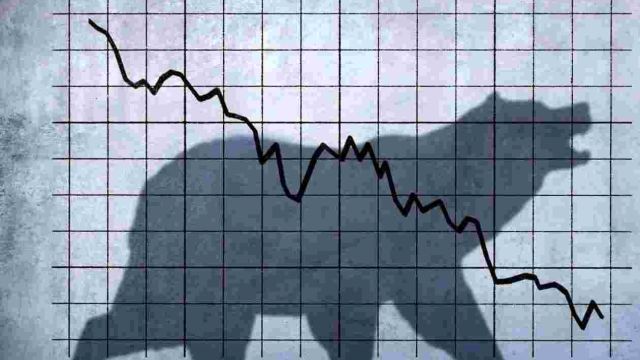
The ascent toward $1 million is rarely a vertical line. As of mid-March 2026, VONG has issued a stern reality check to the “growth-at-any-price” cohort, posting a year-to-date decline of 7.87%. This volatility is a reminder that while the growth factor is powerful, it is also cyclical.
As we look toward the next decade, the critical question for the strategist is one of horizon: Are you investing for the last 15 years of tech-centric dominance, or are you preparing for the next 40 years of market cycles? In a world where value regimes traditionally offer twice the longevity of growth, one must be prepared for a market that looks fundamentally different from the 2010s. Reaching the million-dollar mark requires more than just identifying a high-performance ETF; it requires the philosophical discipline to remain invested when the “accelerator” eventually yields to a new economic regime.



Leave a Reply