

Middle East Escalation: Geopolitical Realignment and the Global Economic Fallout
The decapitation of Iran’s leadership has triggered a non-linear geopolitical shock, forcing a structural recalibration of energy markets and a permanent embedding of the war premium into the global economy.
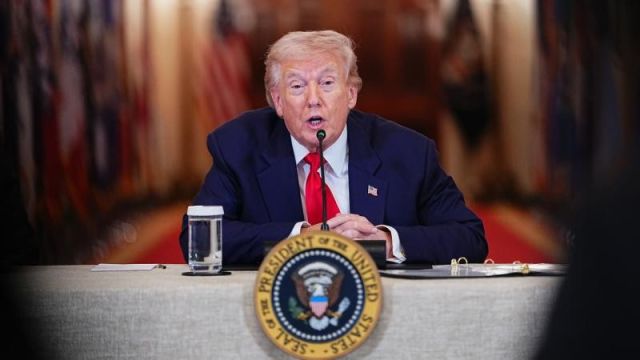
On February 28, 2026, the strategic architecture of the Middle East underwent a violent and irreversible transformation as the United States and Israel launched Operation Epic Fury. This coordinated offensive was not merely a tactical intervention but a systemic attempt to neutralize Iran’s nuclear ambitions and induce a fundamental regime shift. According to the latest CENTCOM updates, the scale of the initial assault was unprecedented, with over 2,000 targets struck within the first 24 hours. The operation achieved its most high-profile objective with the confirmed death of Supreme Leader Ayatollah Ali Khamenei, alongside an estimated 48 high-ranking military and intelligence officials. While President Trump has characterized the military objectives as “pretty well complete,” suggesting a rapid conclusion to the conflict, the reality on the ground is far more volatile. The death of the Supreme Leader has left a fractured political landscape, currently overseen by an interim Leadership Council composed of President Masoud Pezeshkian, Judiciary Chief Gholam-Hossein Mohseni-Eje’i, and Parliament Speaker Mohammad Bagher Ghalibaf. However, the rapid ascent of Mojtaba Khamenei, the late leader’s son, signals an aggressive move toward ideological continuity and deeper militarization, especially as he commands the absolute loyalty of the Islamic Revolutionary Guard Corps (IRGC). This leadership vacuum, compounded by the tragic human cost including the deaths of 150 girls at a school during the strikes has fueled a domestic tinderbox. With memories of the 2025 protests where between 6,500 and 40,000 civilians were killed by the regime, the current instability serves as the primary catalyst for a global market psychological failure.
The “transmission channel” for this regional chaos into the global economic fabric remains the precarious state of maritime security in the Persian Gulf. The Strait of Hormuz, a chokepoint responsible for approximately 20% to 30% of global hydrocarbon flows, is now the center of a high-stakes naval standoff. The “Hormuz risk” has manifested in an 80% collapse in maritime traffic, leaving over 200 oil and LNG vessels currently anchoring outside the Strait in a state of precautionary pausing. For global trade, this represents an insurance nightmare; war risk premiums have surged by 300% to 400%, with some insurers demanding up to 1% of the ship’s total value for a single voyage. To mitigate this systemic freeze, the Trump administration has announced a $20 billion reinsurance program for oil tankers, yet the physical reality of the conflict remains disputed. While Washington claims a near-total annihilation of the Iranian navy, the IRGC contends that American assets, including the USS Abraham Lincoln, were forced to retreat over 1,000 kilometers from the coastline after coming under missile fire. Tehran’s vow that “not one liter of oil” will leave the region while the attacks continue has effectively neutralized the “short-term excursion” narrative, shifting the market’s focus from tactical victories to the resulting macroeconomic shockwaves.
For institutional investors, the “non-linear geopolitical shock” necessitates a rigorous application of scenario-based modeling to navigate the current uncertainty. Analysts at Allianz and Morgan Stanley have identified three primary paths forward, each with distinct implications for the marginal USD price of trade credit and global growth. The baseline scenario assumes a de-escalation within four to six weeks, with Brent crude peaking at $85 per barrel before normalizing toward $70 by end-2026. This path relies on a pragmatic regime transition in Tehran that prioritizes economic survival over prolonged conflict. However, the more probable “prolonged conflict” scenario involves a multi-month blockade of the Strait, pushing oil to a sustained $100 per barrel and forcing a recessionary pivot for the Eurozone. The most severe tail-risk involves an uncontained multi-theater war, where Brent crude exceeds $130 per barrel before eventually consolidating toward $80 by the close of the year. This extreme volatility would likely trigger a systemic USD liquidity crunch and a 20% drop in global equities. Macroeconomic data suggests that every 10% hike in oil prices leads to a 0.1–0.2 percentage point increase in inflation for the U.S. and the Eurozone, a dynamic that has induced a state of “policy paralysis” at the Fed and the ECB. Central banks are now trapped between the need to support growth and the imperative to fight a renewed 2022-style inflation spike, leading to a freeze in planned interest rate cuts.
This regional conflict has become inseparable from the broader theater of Great Power competition, creating a new and fragile Global Oil Axis. China’s position is particularly precarious given its 90% dependency on Iranian oil exports. Any sustained disruption to this supply line threatens Beijing’s industrial stability and accelerates its pivot toward clean energy self-sufficiency. Russia, conversely, occupies a dual role as an Iranian ally and a primary beneficiary of high energy prices. In a notable recalibration of global diplomacy, President Trump recently engaged in a phone call with Vladimir Putin, who reportedly expressed being “impressed” by the precision of U.S. military strikes. This dialogue has opened the door for a strategic trade-off where Russian oil sanctions could be eased as a mechanism to stabilize global pump prices, effectively using Russian crude to backfill the Iranian deficit. Within the G7, however, significant friction has emerged regarding the “defensive distance” from the conflict. While the UK has permitted the use of bases in Cyprus and Diego Garcia for defensive purposes, Spain has officially denied the U.S. use of its military installations. This internal G7 fracture, combined with hesitation over a coordinated release of strategic oil reserves, highlights the lack of a unified Western response to the escalating crisis.
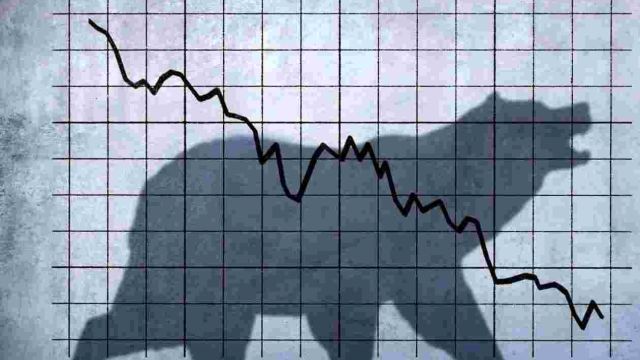
The resulting “risk-off” sentiment has created a stark divergence between asset classes, defining clear winners and losers across the Resilience and Vulnerability layers of the global economy. Safe-haven assets have seen explosive demand, with Gold reaching record highs near $5,400 per ounce and the U.S. Dollar Index strengthening as investors flee emerging market equities. The Resilience Layer is further bolstered by a $20 billion capital commitment toward LNG terminals, power grids, and defense contractors, sectors that have become political imperatives overnight. Conversely, the Vulnerability Layer is under extreme pressure, particularly energy-intensive manufacturing, chemicals, and airlines. The latter faces diminished “belly-cargo” capacity and massive fuel surcharges. Asian markets remain the most exposed, with the KOSPI suffering a dramatic 7.2% decline and the Nikkei plummeting over 3% due to their extreme dependency on Middle Eastern crude. Emerging markets like Bangladesh face a complex “energy import shock” that threatens to overwhelm their FX reserve buffers. Despite a reserve standing of $30.27 billion, Bangladesh faces a direct operational risk as 82% of its scheduled LNG cargoes must transit the Strait of Hormuz. For every $10 rise in oil prices, the country’s monthly import bill expands by an estimated $70 to $80 million, a cost that remittance inflows from the Gulf cannot fully neutralize. The Dhaka Stock Exchange has already signaled this distress, with the DSEX dropping 275 points as investors price in the “Gulf risk premium.”
The events of early 2026 signify the definitive end of the “short-term excursion” narrative and the dawn of a new geopolitical normal defined by structural uncertainty. While U.S. and Israeli tactical successes in Operation Epic Fury may be ahead of the administration’s schedule, the psychological and religious repercussions of the conflict are only beginning to manifest. The appointment of Mojtaba Khamenei and the subsequent religious fatwas issued by two Grand Ayatollahs to “avenge the blood” of the late leader ensure that the “war premium” is now a permanent fixture in the global financial fabric. The risk of global terrorism has been elevated to its highest level in decades, a factor that will continue to weigh on insurance capacity and the landed cost of exports. The world is now entering a critical four-to-six-week window that will determine whether the global economy can achieve stabilization through a pragmatic transition in Tehran or if it will fall victim to systemic contagion. In this new era, the lines between military strategy and market stability have been permanently blurred, and the cost of energy security has been fundamentally repriced for the foreseeable future.

Leave a Reply