
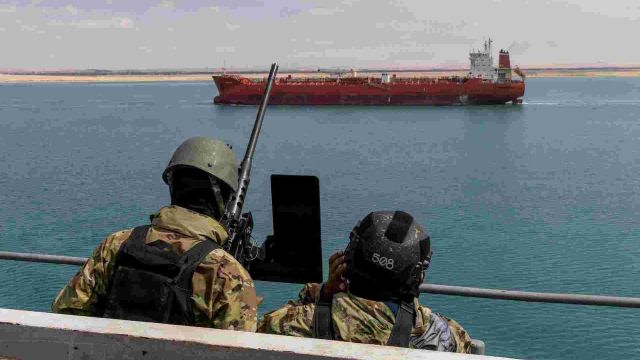

Beyond the Chokepoint: 5 Surprising Realities of the 2026 Strait of Hormuz Crisis
The global economy is frequently likened to a machine, but its true nature is more akin to a circulatory system. When a major artery is constricted, the entire organism feels the shock. On February 28, 2026, the world received a jarring reminder of this fragility when “Operation Epic Fury” a massive U.S.-Israeli military strike on Iran triggered the most significant energy crisis of the decade.
While the headlines were dominated by images of missile barrages and the death of Supreme Leader Ali Khamenei, the true significance of the 2026 crisis lies in the structural shifts beneath the kinetic surface. To understand the future of global security, we must look past the drones and detonations to the deeper, counter-intuitive shifts currently reshaping our world.
Here are five surprising realities of the crisis in the Strait of Hormuz.
1. The Digital Siege: Weaponizing the Escalation Ladder
The opening salvos of Operation Epic Fury were not merely explosive; they represented a permanent shift in the weaponization of civilian digital infrastructure. In a sophisticated blurring of cyber warfare and influence operations, the BadeSaba religious calendar app a staple for over 5 million Iranians was compromised. Users received targeted messages warning that the regime would “pay for their cruel and merciless actions,” effectively turning a tool of faith into a vector for psychological pressure.
This operation coincided with the hijacking of official state news sites, including IRNA, which suddenly displayed anti-regime messaging. The Iranian response was a draconian defensive cyber maneuver: a near-total internet blackout. Reports from the Center for Strategic and International Studies (CSIS) indicate that nationwide connectivity plummeted to just 4% of normal levels.
Critically, the Trump administration has signaled a total departure from “strategic ambiguity.” Washington is now “unapologetically unafraid” to claim credit for these effects. This doctrine has a clear precedent: January’s “Operation Absolute Resolve” in Venezuela, where the President claimed credit for a blackout in Caracas due to a “certain expertise” the U.S. possesses. By moving cyber from the shadows to the podium, the administration has signaled that digital sabotage is now a primary, rather than secondary, theater of war.
2. The Insurance Chokepoint: The Government as Insurer of Last Resort
The Strait of Hormuz was not closed by a physical wall of warships, but by a collapse of the private maritime insurance market. Within 72 hours of the initial strikes, the International Group of P&I Clubs which insures roughly 90% of global tonnage issued cancellation notices for war-risk cover. For very large oil tankers, this initially meant a “war-risk premium” increase of $250,000 per transit, before cover was withdrawn entirely.
This private-market “strike” effectively killed global trade in the Gulf, prompting a radical intervention: a $20 billion federal maritime reinsurance plan managed by the U.S. International Development Finance Corporation (DFC). By stepping in as the “Insurer of Last Resort,” Washington is attempting to break the paralysis of the private sector.
“Working alongside CENTCOM, DFC coverage will offer a level of security no other policy can provide,” stated DFC CEO Ben Black. “We are confident that our reinsurance plan will get oil, gasoline, LNG, jet fuel, and fertilizer through the Strait of Hormuz and flowing again to the world.”
3. The BRICS Fracture: India’s Silent Pivot
One of the most profound diplomatic casualties of the crisis has been the internal cohesion of the BRICS bloc. This failure is particularly glaring because India currently holds the BRICS presidency. While Russia, China, and South Africa were swift to condemn the strikes as “unprovoked acts of armed aggression,” New Delhi maintained a “prolonged silence.”
The timing suggests a calculated strategic realignment. Prime Minister Narendra Modi concluded a high-profile visit to Israel just days before Operation Epic Fury, elevating the relationship to a “Special Strategic Partnership.” This “balanced stance” emphasizing de-escalation without mentioning Iran by name has led to allegations of “tacit approval.” Under India’s presidency, the bloc’s failure to issue a collective statement highlights a major bifurcation: India is increasingly prioritizing Western and Israeli strategic interests over the “Global South” solidarity championed by Beijing and Moscow.
4. The Paradox of Plenty: A Crisis in a Surplus Market
Structurally, 2026 was projected to be the most well-supplied oil market in modern history. According to data from MUFG and the International Energy Agency (IEA), the world entered the year with a record oil surplus of 3.8 to 3.9 million barrels per day (m/b/d).
Yet, this “paradox of plenty” could not prevent Brent Crude from hitting $92 per barrel, with analysts warning of a spike to $150. The crisis exposed a lethal “Geography Trap”: even with a global surplus, 20% of the world’s daily oil remains physically trapped behind a chokepoint that is only 20 miles wide. The impact on gas is even more severe; QatarEnergy stopped production on March 2 and declared Force Majeure on March 4. To mitigate the shock, Pakistan has already requested that Saudi Arabia reroute oil supplies via Yanbu’s Red Sea port a desperate attempt to bypass the Strait entirely.
As Qatar’s Energy Minister Saad Sherida al-Kaabi warned, the potential for a total halt of Gulf exports could “bring down economies of the world.”
5. The “Invisible” Blockade: Dark Fleets and the Human Toll
Legally, the Strait remains open; Iran never formally declared a blockade. However, the Islamic Revolutionary Guard Corps (IRGC) achieved “complete control” through an “invisible” blockade of VHF radio warnings and targeted violence. This was not a bloodless maneuver. At least four seafarers have been killed, including Indian crew members on the tankers Skylight and MKD VYOM.
The crisis has forced a shift toward “maritime dark-fleet” tactics. The tanker Pola successfully bypassed the blockade by turning off its AIS transponder, a move typically reserved for sanctioned actors. However, most commercial operators cannot afford such risks. In Japan, refiners who obtain 95% of their crude from the Middle East have already begged their government to release strategic reserves. The Strait has become a dead zone where the only vessels moving are those willing to operate in the shadows of international maritime law.
Conclusion: The “Battlefield Math” of a Choice War
As the conflict enters its second week, it has become a “war of choice” characterized by what Richard Haass describes as the “imperial presidency” a policy executed with a free hand, hollowing out the established national security apparatus.
The most sobering reality is what Haass calls the “unsustainable rate” of air defense expenditure. The “battlefield math” is currently lopsided: the U.S. and its allies are using multi-million dollar interceptors to down cheap Iranian drones and missiles at a rate that manufacturing pipelines cannot match.
The 2026 crisis has proven that control over the flow of information and insurance is as lethal as control over the water itself. It leaves us with a haunting question: Is the global economy resilient enough to survive a world where “strategic autonomy” and unilateral action matter more than the international law that once governed the high seas?



Leave a Reply