

2026 and the Death of the Old Guard: 5 Surprising Shifts Redefining Your Wealth
1. Introduction: The Era of “Cloudy Data” is Over
For years, the global investment landscape felt like a puzzle with missing pieces. We struggled through tangled debates and ambiguous data, operating in a “cloudy” world defined by seamless globalization, low inflation, and a lingering “peace dividend.” As we navigate 2026, that period of ambiguity has vanished. The fog has lifted, revealing a sharp, high-stakes frontier.
The era of easy assumptions is officially over. We have entered a regime change driven by three relentless forces: Artificial Intelligence (AI), global fragmentation, and structural inflation. This isn’t just a market cycle; it is a fundamental re-architecting of how wealth is created and preserved. We are no longer asking if the world is changing; we are now forced to invest in a reality where the staggering productivity promises of AI collide with the friction of a fractured world order and volatile price levels.
2. The 2026 Agentic AI Milestone: The Knowledge Worker’s “Steam Engine Moment”
Since late 2022, the world has treated AI as a sophisticated chatbot a tool for specific, narrow tasks. In 2026, we have reached the inflection point: the transition from generative AI to “agentic models.” We are moving from software that responds to prompts to autonomous systems capable of seeking goals and executing complex workflows without human hand-holding.
The $6 trillion knowledge worker market is currently facing its “steam engine moment.” While basic benchmarks for LLMs saw a slight stall in late 2025, the trajectory of agentic intelligence remains aggressive and vertical.
“Extrapolating from the OSWorld agentic task benchmark implies leading-edge models are improving by 37 percentage points per year, which would imply human-level performance in May 2026.”
By the spring of this year, we expect these autonomous agents to match human performance across a staggering array of professional functions. For the sophisticated investor, the narrative has shifted: the value is no longer in the “prompt,” but in the “agent” now re-engineering corporate cost structures from the inside out.
3. From “Cheapest Origin” to “Rules of Origin”: The Death of the Peace Dividend
The old playbook of globalization was simple: find the “cheapest origin.” That world is dead. In its place is a map defined by “rules of origin,” where efficiency has been unceremoniously sacrificed at the altar of regional resilience.
This is the final expiration of the “peace dividend” we enjoyed since 1992. Between 1992 and 2022, the West essentially disarmed; European production of tanks plummeted by 77% and submarines by 47%. Today, the world is rearming, and trade is the new frontline. The decoupling of the U.S. and China is no longer a political talking point it is a mathematical certainty. China’s share of U.S. imports has collapsed from 22% to 12%, while tariffs now impact nearly 70% of U.S. goods imports by value.
The new center of gravity is the North American trading corridor (USMCA). We are seeing the “weaponization” of regional blocs: Mexico has levied a 50% tariff on Chinese autos, while Canada has imposed a 100% surtax on Chinese electric vehicles. As the 2026 USMCA renegotiations intensify, stricter rules of origin are forcing critical supply chains into a protected regional sphere. Security is the new “resilience premium,” and it ensures that the floor for global inflation has been permanently raised.
4. The 8.1x Trigger: Why Korea is the World’s Volatility Canary
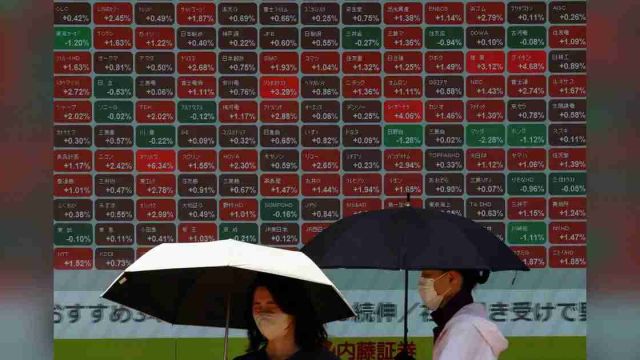
In March 2026, the U.S.-Iran conflict provided a masterclass in how fragmented markets react to geopolitical shocks. While the Nikkei 225 remained relatively stable, shedding a cumulative 7.8% for the week, South Korea’s Kospi acted as the “volatility canary.” The index suffered a gut-wrenching 12.06% one-day plunge, only to roar back with a 9.63% rebound the following day.
Why such violent swings? The Kospi’s volatility was driven by investor sentiment rather than actual oil dependence. Critically, the market had not yet found “stable, agreed-upon levels” following the massive surges of 2025. Smart money finally stepped in when a specific technical trigger was pulled: the 12-month forward price-to-earnings (P/E) ratio fell to approximately 8.1 times.
Economists identified the 5,000-point mark as this “bottom-fishing” threshold. Historically, the market finds its floor at this eightfold level, and 2026 proved the rule. For investors, the lesson is clear: in a world of “cloudy” geopolitics, valuation metrics like the 8.1x P/E ratio are the only reliable anchors in a sea of sentiment-driven chaos.
5. The Ghost in the Machine: Fundamental Growth vs. Dot-Com Delusion
The “bubble” skeptics are vocal, but the data tells a different story. Unlike the 1990s fiber-optic boom where 90% of installed fiber remained “unlit” and unused the AI infrastructure of 2026 is being consumed as fast as it can be built. Data center vacancy rates are at a record-low 1.6%, and 75% of capacity currently under construction is already pre-leased.
Look at the valuations. During the Dot-Com bubble, Cisco’s stock price rocketed 40x while its earnings grew a mere 8x. In contrast, Nvidia’s 14x price increase over the last five years was actually outpaced by 20x earnings growth. This is returns driven by fundamentals, not just hype.
“The ‘circular’ investments from the AI supply chain deals in which key industry players buy and sell from one another using equity and computing power as currency certainly increase risk, but they could also create a more symbiotic ecosystem.”
This mechanism using compute as currency is a hallmark of the new regime. While it creates a symbiotic, high-risk ecosystem, the massive cash flows generated by hyperscalers suggest that the “Ghost in the Machine” is very much a producer of real-world profit.
6. The Physical Wall: Why the Revolution is Stalling on 1950s Infrastructure
The ultimate irony of the AI revolution is that it is being throttled by physical constraints from the mid-20th century. Investors are hitting a “physical wall”: a five-year backlog for new U.S. power generation and a transmission grid where 70% of lines are over 25 years old.
The numbers are staggering. Data center power demand is projected to grow by 662 terawatt-hours more than the annual generation of Texas and California combined. This creates a massive bottleneck that favors the agile over the traditional. While a natural gas turbine requires a five-year lead time, renewable projects can be deployed in as little as one year, creating a strategic opening for green-tier infrastructure.
Beyond power, water has emerged as the new “zoning war” front. Massive cooling needs for data centers have led to local opposition and the cancellation of major projects in Tucson and Indianapolis. Your digital portfolio is currently at the mercy of local water rights and aging transformers. The “binding constraint” of 2026 isn’t the code; it’s the copper and the cooling.
7. Conclusion: The New Playbook for a Fractured World
Navigating this new frontier requires “resolve with agility.” While the Federal Reserve’s rate-cutting cycle provides a constructive backdrop for economic growth, the structural shifts in inflation and fragmentation are permanent features, not bugs.
The “Old Guard” of seamless globalization and the 1992 peace dividend is gone. We have traded efficiency for security and “cloudy data” for high-impact reality. As you audit your holdings for the remainder of 2026, ask yourself the most important question for any long-term steward of wealth:
Is your portfolio built for the world as it exists today, or are you still betting on a world that no longer exists?



Leave a Reply