
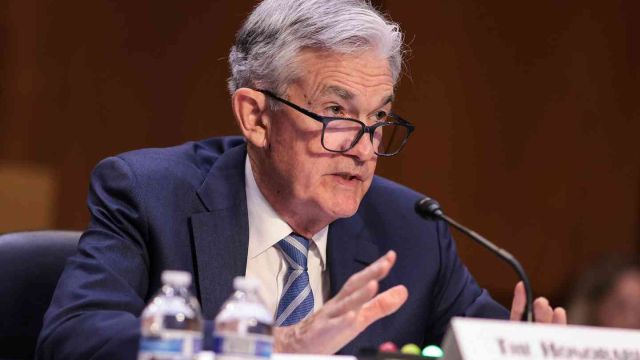

Fed seeks to block Justice Dept. subpoenas in Powell probe
The stability of the global economy has long rested on a delicate, unwritten entente: the Federal Reserve sets interest rates based on clinical data, and the White House maintains a respectful distance. Today, that agreement is in tatters. In an unprecedented escalation of inter-branch conflict, the Department of Justice (DOJ) has launched a criminal investigation into sitting Federal Reserve Chair Jerome Powell. While the surface-level dispute concerns office renovations, the underlying battle is a high-stakes struggle over the very definition of independent governance.
The gravity of this moment cannot be overstated. As Douglas Elmendorf, former Director of the CBO, has noted, the international community is watching with alarm; in a move with no known precedent, foreign central bank leaders recently issued a joint statement supporting the Fed’s independence.
Here are five surprising truths behind the standoff currently shaking Washington and the global financial markets.
1. The “Pretext” Problem: Why Office Renovations Triggered a Grand Jury
The formal trigger for the DOJ’s investigation is not monetary policy, but a $2.5 billion renovation of the Federal Reserve’s Eccles and Central buildings. U.S. Attorney Jeanine Pirro is investigating whether Powell made false statements during his June 2025 congressional testimony regarding these projects specifically denying the use of “lavish” features like new marble, specialized elevators, and roof gardens.
Powell has been uncharacteristically blunt in his defense, characterizing the investigation as a “pretext” a legal smoke screen designed to intimidate the Fed into cutting interest rates to satisfy the administration’s political agenda.
“The threat of criminal charges is a consequence of the Federal Reserve setting interest rates based on our best assessment of what will serve the public, rather than following the preferences of the President,” Powell stated.
Adding to the “pretext” narrative is a crucial institutional detail: the Federal Reserve funds its own operations through interest on securities and service fees, rather than through congressional appropriations. By launching a criminal probe into how the Fed spends its own non-taxpayer dollars, the DOJ is executing an aggressive jurisdictional reach that many legal scholars view as a targeted assault on the Fed’s operational autonomy.
2. The Unitary Executive vs. 30 Years of Tradition
The conflict represents a fundamental ideological shift in American governance. For the last three decades, through the Clinton, Bush, and Obama administrations, a norm of “Fed Independence” prevailed. Presidents traditionally forswore public commentary on the Fed’s tactical decisions to maintain market stability and global trust in the dollar.
However, the current administration is operating under a robust “Unitary Executive” theory. This legal philosophy posits that every function of the executive branch including the setting of interest rates should fall under the President’s direct control. While Douglas Elmendorf warns that the U.S. is the “central player” in international finance and that this shift could ripple through global markets, he also notes a curious phenomenon: markets have remained relatively mild.
This market calm, however, may be a sign of “complacency.” Investors currently trust that institutional safeguards will hold, but the risk remains that political pressure will eventually erode the Fed’s data-driven mandate. If the “Unitary Executive” succeeds in subsuming the Fed, the traditional firewalls protecting the global economy from political volatility will vanish.
3. The “Negative Executive Privilege”: A Counter-Intuitive Legal Twist
While the administration asserts its power, a surprising legal theory known as “Negative Executive Privilege” complicates the Fed’s defense. Traditionally, executive privilege is viewed as an affirmative power of the President to withhold information. However, this theory suggests the privilege only exists where the information-seeker (Congress or the Courts) lacks the legal power to compel it.
This means that if a body like the House Committee on the Judiciary can demonstrate a “legitimate legislative purpose,” the Fed’s defensive posture could legally crumble. In the current standoff, Congress has a specific hook: it is considering amending 28 U.S.C. § 541(c) the law governing the removal of federal officials to include a “good cause” provision. By framing the probe as a necessary inquiry into whether current laws allow for “improper political interference,” Congress creates a legal entitlement to the Fed’s internal deliberations that the “Negative Executive Privilege” theory may not be able to block.
4. The Bipartisan Blockade: Senator Tillis and the Power of the “Lame Duck”
The investigation has created a significant political gridlock. Senator Thom Tillis (R-N.C.), a key member of the Senate Banking Committee, has effectively frozen the Fed’s leadership transition by refusing to confirm any nominees including Powell’s intended successor, Kevin Warsh until the DOJ probe is resolved.
In an attempt to break the impasse, Treasury Secretary Scott Bessent proposed a compromise: moving the investigation from the DOJ to the Senate Banking Committee. The goal is to satisfy the President’s demand for an investigation while removing the threat of criminal prosecution.
Tillis, however, has maintained a masterful “poker face.” His leverage is uniquely absolute because he is planning to retire at the end of the year. As a “lame duck,” Tillis is immune to the standard political pressures or promises the White House might use to sway a senator facing re-election. His insistence on resolving the DOJ probe before moving any nominees leaves the administration’s economic transition in a state of suspended animation.
5. Breaking the Norms: The Inference of Improper Purpose
Legal experts and former DOJ attorneys have raised alarms over the conduct of the investigation. In recent amicus briefs, these specialists argue that the DOJ has deviated sharply from longstanding norms. They point to three factors that create a legal inference of an “improper purpose”:
- Timing: Subpoenas were issued exactly as the President’s public criticism of the Fed reached a fever pitch.
- Thin Justification: The legal basis for a criminal probe into architectural details (marble and elevators) is viewed as exceptionally weak.
- Overbreadth: The subpoenas are described as “too sweeping,” suggesting a “fishing expedition” rather than a focused inquiry.
Applying the standard of inference seen in cases like QueerDoc, PLLC v. DOJ, these experts argue that when an investigation deviates this wildly from standard procedure, the court must infer that the process itself is being used for political intimidation rather than the neutral enforcement of the law.
Conclusion: The Price of Chaos
The war on Jerome Powell is more than a personal or political feud; it is a stress test for the American institutional framework. As we have seen, political pressure on the central bank is never costless. Historically, when Fed independence is compromised, the bill is paid in higher Treasury yields, rising gold prices, and a general decline in global confidence.
The long-term damage, however, may be internal. As Wells Fargo Economics has noted, this chaos will make the next Fed Chair’s job significantly harder. Building a consensus among the 19 members of the Federal Open Market Committee (FOMC) requires a chair who is perceived as a neutral arbiter of data, not a political appointee under the thumb of the executive.
As the “unitary executive” theory meets the “rule of law” in our courtrooms, we must ask: can our institutional safeguards survive this collision? The answer will determine the price of American credit and the stability of the global order for decades to come.

Leave a Reply