


2026 Oil Market Outlook: Geopolitics and Supply Dynamics
1. Introduction: The Great Disconnect
As the world moves through the final days of February 2026, the global energy market has entered a state of profound cognitive dissonance. By every logical tenet of classical economics, oil prices should be in a freefall. On paper, the world is awash in crude; yet, Brent futures are stubbornly defying geopolitical gravity, hovering near seven-month highs between $71 and $72 per barrel.
This is the “Great Disconnect.” While the “paper” market screams oversupply, the physical and psychological markets are transfixed by a volatile cocktail of binary diplomacy and looming military strikes. With President Trump’s State of the Union address imminent and the third round of high-stakes nuclear talks about to commence in Geneva, the market is no longer trading on fundamentals it is trading on fear.
2. The 2-Million-Barrel Mystery: Why “Paper” Surpluses Don’t Set Prices
The ultimate evidence of this market absurdity arrived this week via the American Petroleum Institute (API). For the week ending February 20, the API reported a staggering 11.4-million-barrel crude build the largest single-week increase since February 2024. In any other year, such a glut would have sent prices plunging. Instead, the market barely blinked.
Analysis from Citi suggests the global market is currently oversupplied by approximately 2 million barrels per day (mb/d). In a vacuum, this surplus should anchor Brent in the high-$40s or $50/bbl range. That it remains $20 higher is a testament to the “inventory vs. reality” gap. Part of this is physical: the “supergiant” Tengiz field in Kazakhstan, a critical driver of that nation’s GDP, has been offline for nearly a month following a devastating fire on January 29. Furthermore, Chinese strategic buying continues to mop up excess supply, creating a synthetic floor that fundamentals cannot penetrate.
“However, these factors do not explain why prices are well above the high-$40s or $50/bbl, as prices would have fallen to these levels with a 2-mb/d of oversupply. One factor is Chinese buying for inventory purposes continuing.” – Citi analysts led by Anthony Yuen
3. Nature’s Freeze-Off: The Fern Effect
While the global surplus looms, the immediate physical market has been tightened by an unexpected meteorological shock: Winter Storm Fern. This severe cold-weather event across the American heartland acted as a sudden, localized supply shock, curtailing approximately 1.5 million barrels per day of U.S. production at its peak. This “freeze-off” did more than just disrupt pipes; it neutralized the impact of the global surplus in the minds of traders, providing a temporary domestic floor for prices just as international tensions began to boil.
4. The 20% Chokepoint: Living on the Edge of the Strait of Hormuz
If Winter Storm Fern provided the floor, the Strait of Hormuz is currently providing the ceiling. Approximately 20% of the world’s oil consumption passes through this single, narrow artery. The current price premium is inextricably linked to reports that Iran has accelerated talks to purchase Chinese anti-ship cruise missiles a tangible threat to the U.S. naval forces currently assembled near the Iranian coast.
Impact Analysis Traders are currently pricing in a “geopolitical premium” that Citi estimates adds $3 to $4 to every barrel. This “fear floor” is so potent that it has effectively rendered the 11.4-million-barrel API build irrelevant. The market sentiment is binary: while a U.S. military strike would likely be limited to select government or military sites, the mere risk of a retaliatory closure of the Strait of Hormuz is a “tail risk” that no hedge fund manager is willing to ignore.
5. The “Diplomacy or Disaster” Deadline
The pivot point for 2026 lies in Geneva. The personnel involved reflect the gravity of the moment: U.S. envoy Steve Witkoff and presidential advisor Jared Kushner are slated to meet Iranian Foreign Minister Abbas Araqchi for a third round of negotiations. Araqchi has adopted a narrative of a “win-win” diplomatic solution, yet the clock is ticking against a backdrop of “very bad day” warnings from the White House.
Iran’s deputy foreign minister stated on Tuesday that the country will do “whatever it takes” to reach a deal with the U.S. over its nuclear program.
However, the diplomacy is operating under a shadow of “binary gravity.” President Trump issued a 10-to-15-day deadline on Monday, February 23rd. This places the potential for a “disaster” scenario in early March a date that converges ominously with the March 1st OPEC+ meeting. If diplomacy fails by that deadline, the risk of military action becomes the market’s primary North Star.
6. The Quiet End of the Shale Boom?
Beyond the immediate headlines, a structural shift is quietly eroding the “Shale Ceiling.” Data from Al Rajhi Capital reveals a “smoking gun” for the maturation of U.S. shale: the count of Drilled but Uncompleted Wells (DUCs) has collapsed from 8,779 to approximately 5,015. With active rig counts also in steady decline, the U.S. is approaching a production plateau.
Crucially, the nature of demand is also shifting. While gasoline demand is plateauing, a new “consumption floor” is being built by the industrial and technological sectors specifically the energy-intensive needs of AI data centers and new manufacturing hubs. This suggests that even if the geopolitical premium fades, the world may never return to the era of $40 oil.
7. Conclusion: A Fragile Equilibrium
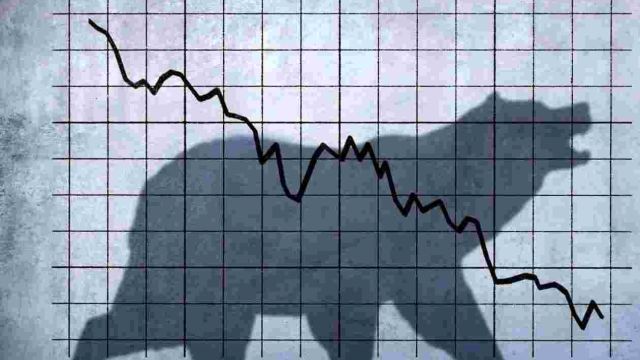
The oil market of early 2026 is a study in fragility. The fundamental outlook is undeniably bearish: a massive supply surplus, low OECD stock levels, and a new 10% global U.S. tariff (slated to rise to 15%) that is dampening the demand outlook. In a rational world, these factors would have already broken the market.
However, we do not live in a rational world; we live in a geopolitical one. The March 1st OPEC+ meeting will be a critical bellwether, as the group considers resuming production increases from April. But even if OPEC+ adds barrels, the price will remain hostage to the 10-to-15-day Geneva deadline. We are one headline away from either a $20 collapse or a $20 spike.
Closing Thought: In a world where 20% of global energy flows through a single vulnerable corridor under the shadow of cruise missiles, is “fair market value” nothing more than a dangerous illusion?



Leave a Reply