
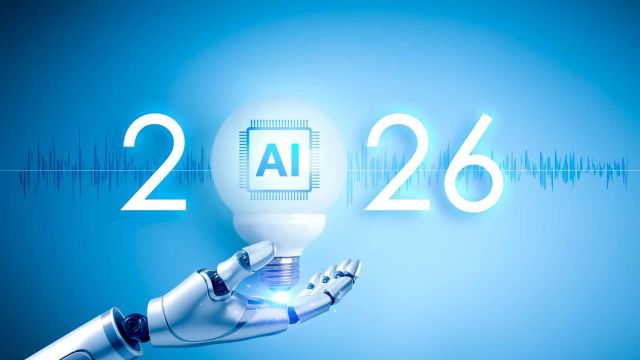

2026 Global Market Outlook: Investing in the AI Supercycle
1. Introduction: The Year the Hype Met the Real Economy
The year 2025 will be remembered for its “narrative contest” a volatile tug-of-war between geopolitical fragmentation, sparked by the “Liberation Day” tariff tensions, and a disruptive innovation surge led by Nvidia’s 69% revenue growth and OpenAI’s valuation surpassing $500 billion. As we enter 2026, the innovation narrative has decisively prevailed, marking a transition from 2025’s volatility to a stable, innovation-led trajectory.
This evolution is best understood through Amara’s Law: we tend to overestimate a technology’s impact in the short term and underestimate it in the long term. If 2024–2025 was the period of short-term overestimation and speculative exuberance, 2026 is the year of long-term structural integration. Innovation is no longer a passing theme; it has become the operating system of the global market architecture.
2. The Rise of the “Techno-Industrial State”
The most profound shift in the current cycle is the move away from the late-20th-century era of pure deregulation toward a “New Techno-Industrial State.” This model represents a strategic pivot where government officials wield direct influence over the economy to advance national security and resilience rather than simple profit maximization.
This is a modern resonance of the “Galbraithian 1967 Industrial State,” but updated for an era of Great Power competition. The U.S. government’s recent 10% stake in Intel taken in exchange for support for the struggling semiconductor giant serves as a definitive signal. This move, unthinkable during the market-primacy era of the 1990s, prioritizes semiconductor resilience over market-led efficiency. In this new architecture, “economic statecraft” means that geopolitical goals carry as much weight in capital allocation as corporate earnings.
“Relying on markets to allocate investment and production is reasonable when national security risks are low. However, now that those risks have become elevated… it’s reckless to assume that markets will make allocations consistent with national security goals.” – Confluence Investment Management
3. Beyond the Chatbot: The “Agentic” Revolution
The AI supercycle has progressed from simple generative “chatbots” to autonomous agentic systems that reason, plan, and act. This leap is moving machine intelligence beyond the screen and into the core production workflows of the services and industrial sectors.
The scale of this “physical” AI build-out is staggering, with global data center spending projected to reach $7.9 trillion between 2025 and 2030. This is not merely a tech boom; it is a productivity supercycle. Early estimates suggest this efficiency gain provides a 0.5% annual lift to global productivity a transformation that echoes the “Creative Destruction” theories of the 2025 Nobel Prize winners Mokyr, Aghion, and Howitt. By automating complex workflows, this revolution allows for non-inflationary growth, providing a critical buffer as the global economy navigates labor shortages.
4. The Great Rotation: Why “Secular Value Anchors” are Beating “Growth”
While the broader market remains effectively flat, a “Great Rotation” is redefining market leadership. The “Magnificent Seven” (with the singular exception of Nvidia) are currently undergoing an “ROI Audit.” Investors, skeptical of when massive AI expenditures will yield tangible returns, are increasingly using these mega-cap names as a “source of funds” to rotate into undervalued quality cyclicals and mid-caps.
The valuation arbitrage is clear: mid-cap stocks are trading at forward P/E ratios of 16.5x, compared to the 22x+ multiples seen in the tech complex. This rotation is supported by mid-cap earnings growth projections of 15.2% to 19.3% for 2026, significantly outpacing the broader S&P 500.
2026 Sector Winners & Quality Anchors:
- Energy (+21%): Buoyed by the immense electricity demands of data centers.
- Basic Materials (+17%): Driven by the “physicalization” of the AI boom.
- Consumer Staples (+15%): Serving as “non-discretionary defensives” in a K-shaped environment.
- Quality Cyclicals: Industrial leaders like Caterpillar and TTM Technologies are capturing massive backlogs in defense and infrastructure.
- Dividend-Growth Darlings: Regional banks such as Webster Financial and SouthState Bank are benefiting from a normalized yield curve and improved net interest margins.
5. The Infrastructure Renaissance (Natural Gas and Nuclear)
A fundamental paradox of the 2026 economy is that our digital future is increasingly tethered to “old-world” industrial assets. The AI supercycle is no longer limited by code, but by physical load constraints on the power grid.
To meet the 24/7 energy demands of $7.9 trillion worth of data centers, the U.S. has begun relaxing the strict regulatory environment that previously hamstrung nuclear power. This infrastructure renaissance is a boon for natural gas and uranium, as the market realizes that “Silicon Valley” cannot function without “The Grid.” Pipelines, power plants, and modular reactors have become the indispensable hardware of the AI age.
6. The K-Shaped Consumer and the Fiscal Paradox
We are operating in a sharply divided “K-shaped” economy. The top 10% of households, buoyed by strong financial markets and the wealth effect, now generate 50% of total U.S. consumption. This affluent resilience is reflected in the Atlanta Fed’s recent 4.2% GDPNow estimate, which confirms that the underlying domestic economy remains robust despite pockets of consumer credit stress in lower-income tiers.
Simultaneously, the U.S. is navigating a “Fiscal Paradox”: maintaining a 6–7% deficit while growth reaccelerates. This is largely the result of the “One Big Beautiful Bill Act” (OBBBA). While signed in 2025, its primary impact is being felt in 1H 2026 as workers receive lump-sum refunds from new tax deductions. The OBBBA is projected to add 0.8% to 1% to U.S. GDP this year, creating a powerful if lumpy consumption surge that offsets trade-related headwinds.
“We remain constructive but vigilant: constructive because we share optimism about AI’s transformative potential, and vigilant because every phase of innovation brings risks of overconfidence and inefficient capital allocation.” – Alfonso Castillo Lapetra, Santander Private Banking
7. Conclusion: Discipline in the Age of Transformation
The 2026 outlook is one of “soft landings” and structural rebalancing. Success in this environment depends less on chasing the momentum of the previous year and more on identifying where innovation creates measurable, lasting value.
The defining question for the remainder of 2026 is whether the global economy can sustain this massive fiscal expansion and infrastructure build-out without crossing the threshold where markets demand renewed austerity. In an era where governments have rejoined boards of directors and “boring” industrials outpace digital giants, disciplined capital allocation remains the only safeguard. We must stay constructive yet vigilant as the AI supercycle moves from the server rack to the real economy.




Leave a Reply