

Global Health Funding Crisis: Progress at Risk
1. The Paradox of Progress: An Introduction
Imagine standing at the finish line of a twenty-year marathon, the tape in sight, only to watch the stadium lights flicker and die. This is the vertigo-inducing reality of global health in 2025. We are witnessing a decades-long march toward the eradication of history’s deadliest pandemics running headfirst into a wall of geopolitical isolationism.
The “State of the Fight” has, on paper, never been more triumphant. Since its inception in 2002, the Global Fund partnership has saved 70 million lives and slashed the combined death rate of HIV, tuberculosis (TB), and malaria by a staggering 63%. This success is built on the backs of people like Shifawu Abdulkarim, a community mobilizer in Kaduna State, Nigeria, who has spent 14 years hand-delivering mosquito nets and malaria medicine to protect millions. Yet, even as Shifawu and her peers prove the model works, the “2025 Funding Cliff” looms. With external health aid projected to plummet by 30% to 40%, the very machinery that saved those 70 million lives is being dismantled just as it reaches peak efficiency.
2. The $35 Miracle: How the Price of Life Plummeted
One of the most profound achievements of the 21st century is the commoditization of survival. In 2002, a single year of antiretroviral therapy (ART) carried a death-sentence price tag of $10,000. Today, through relentless market-shaping and the “miracle” of pooled procurement, the cost of the gold-standard TLD regimen has bottomed out at just $35 per year.
This isn’t just a budgetary win; it’s a radical form of equity. Walk into the National Medical Stores in Entebbe, Uganda, and you’ll see warehouse officers like Resty Nakate scanning stacks of quality-assured medicines destined for the furthest reaches of the country. This efficiency allows limited donor dollars to be stretched across entire populations. As Peter Sands, Executive Director of the Global Fund, notes:
“With an unremitting focus on national outcomes measured in terms of human impact… the Global Fund is the most consistently effective mechanism for translating donor dollars into impact at scale.”
3. Five Seconds to a Diagnosis: AI’s High-Stakes Gamble in Mosul
The cutting edge of medicine is no longer reserved for the wealthy. In a mobile lab parked outside an elderly man’s home in Mosul, Iraq, the “CAD4TB” system is doing the impossible. By using artificial intelligence to interpret digital X-rays, the system provides a TB diagnosis in just five seconds. Before this, patients in this war-torn region often waited three agonising months for results.
This is the investigative truth of modern global health: high-tech innovation is not a luxury elective; it is a survival requirement. In resource-constrained environments, AI-driven case-finding is the only way to squeeze maximum impact from every cent. But just as the diagnostics reached five seconds, the funding for the doctors disappeared.
4. The Great 2025 Funding Cliff
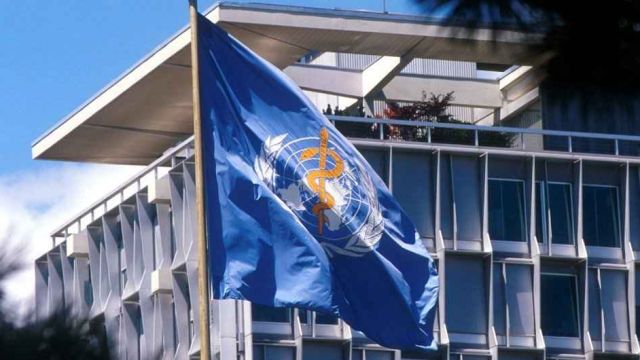
The momentum of the AI revolution is currently colliding with a sharp heartbeat skip in global financing. A seismic shift in U.S. policy including an 80% cut to USAID and a formal withdrawal from the World Health Organization (WHO) has triggered a systemic shock. The WHO reports that in some low-income nations, these cuts have already reduced critical services, from vaccinations to maternal care, by up to 70%.
The immediate, visceral consequences are spreading across the Global South:
- Mass Layoffs: Over 50 countries report job losses among health workers, including 15,000 in South Africa and 41,000 in Kenya.
- A Testing Freefall: HIV testing among key populations in South Africa has dropped by 21% in mere months.
- The DREAMS Shutdown: The DREAMS program, a lifeline for 2 million adolescent girls and young women, has been shuttered.
- Resurgent Threats: These cuts occur as Africa grapples with dangerous new outbreaks of Mpox and Marburg.
While the “Accra Reset” and other frameworks highlight a new “strategic self-reliance,” with Nigeria injecting $200 million into its own health budget and Ghana implementing a 60% budget increase for its national health insurance, domestic resources cannot yet fill the crater left by the retreat of the world’s largest donor.
5. Equity Breakthrough: The Lenacapavir Milestone
Amidst the fiscal ruins, a milestone has emerged that shatters the old “innovation lag.” Traditionally, poor nations waited a decade or more for new technologies a gap that cost millions of lives during the early years of the AIDS crisis. Lenacapavir, a twice-yearly injectable PrEP with 100% success in trials, is breaking that cycle.
For the first time in history, a breakthrough HIV prevention product is launching simultaneously in low-income and high-income countries. This radical departure from the norm ensures that a woman in a rural village has the same access to the latest science as a man in Manhattan. It is a signal that the innovation pipeline is finally being redesigned for equity, but it is an opportunity that hinges entirely on the survival of the procurement systems now under threat.
6. The “Accra Reset” and the End of Aid Dependency
The funding crisis has accelerated a movement away from traditional aid models. Ghana’s “Accra Reset” is not just a policy shift; it is a reimagining of global governance. The goal is to move from aid dependency toward a model where countries take full ownership of their health systems.
Through the Global Fund’s Sustainability, Transition & Co-financing (STC) policy, 12 programs across eight countries are currently transitioning entirely away from external support. This is the “pathway to self-reliance” that global health strategists have long championed. As Dr. Tedros Adhanom Ghebreyesus, WHO Director-General, states:
“In the crisis lies an opportunity for countries to transition away from aid dependency towards sustainable self-reliance, based on domestic resources.”
7. India: The New Pharmacy of the Global South?
As the United States retreats into isolationism, a tectonic shift in global power is occurring. India is moving to fill the vacuum, positioning itself not just as a supplier, but as a leader of “South-South” cooperation. Already producing 60% of the world’s vaccines and 20% of Africa’s pharmaceutical imports, India is now establishing structural roots by opening regulatory offices across the African continent to streamline drug approvals.
This isn’t merely a change in procurement; it is the regionalization of global health. By providing WHO-certified, affordable generic medicines and digital health solutions, India is creating a new, sustainable axis of health security that is less vulnerable to the political whims of the West.
8. The 12-Year Gift: A Closing Thought
The stakes of this paradox are measured in a single, staggering statistic: between 2002 and 2021, life expectancy in 15 sub-Saharan African countries rose from 49 to 61 years. More than half of that 12-year gift of life is attributed directly to the fight against HIV, TB, and malaria.
We have proven that, with the right tools and the right funding, we can buy back a decade of life for entire nations. The question for 2025 is whether we will watch the clock run backward. The current crisis is an opportunity for a radical new era of self-reliance, but if the transition is too abrupt, the “2025 Cliff” will be a graveyard for millions of lives we have already fought so hard to save. Will we find the radical new ways to fund our survival, or let our greatest victory slip away at the finish line?


Leave a Reply