
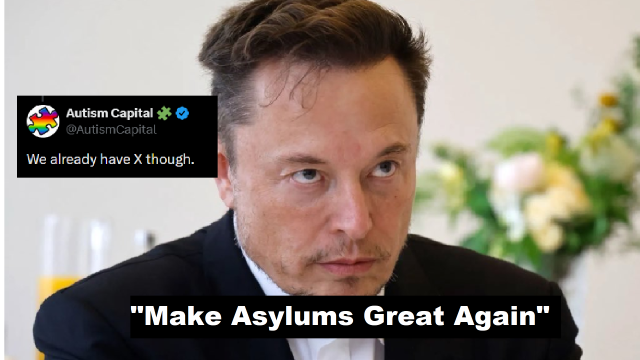

In the hyper-modern digital square of X (formerly Twitter), Elon Musk has recently championed a sentiment once thought buried in the mid-20th century: the return of the asylum. This isn’t just billionaire bravado; it’s a policy reality unfolding on the streets of New York City. Mayor Eric Adams has deployed a “boots-on-the-ground” strategy, empowering police and clinicians to remove unhoused individuals from the subways and streets, even if they pose no immediate violent threat. We are witnessing a quiet, aggressive resurgence of Involuntary Civil Commitment—the legal machinery that allows the state to lock a person in a psychiatric ward against their will.
For decades, this process has hummed along in the shadows of the 14th Amendment, operating within a constitutional “gray area” that prioritizes state order over individual autonomy. While the public views these policies through the lens of compassion or urban aesthetics, the legal reality is a cold, calculated balancing act. As we tilt back toward institutionalization, we must uncover the unsettling legal architecture that makes it easier to deprive a person of their liberty for being “confused” than for committing a crime.
Seriously https://t.co/YTi3j7KBnw
— Elon Musk (@elonmusk) February 17, 2026
The Death of the Parent-State: From Benevolence to Police Power
To understand where we are going, we must see how the legal justification for confinement has hardened. Historically, the state justified locking up the mentally ill under the doctrine of parens patriae—acting as a benevolent, if stern, parent to those “unable to care for themselves.” However, as the Patient Rights Movement gained steam in the mid-1970s, the Supreme Court shifted the foundation of this power.
The state moved away from the nursery and toward the precinct, increasingly relying on “police power”—the authority to maintain public order. This transition culminated in the 1975 landmark case O’Connor v. Donaldson. The Court ruled that a diagnosis of mental illness is not a “get-out-of-jail-free” card for the state. To keep someone indefinitely, the state must prove “dangerousness.” Justice Potter Stewart famously rebuked the idea that society could simply hide away those it found inconvenient or strange:
“A finding of ‘mental illness’ alone cannot justify a State’s locking a person up against his will and keeping him indefinitely in simple custodial confinement… May the State fence in the harmless mentally ill solely to save its citizens from exposure to those whose ways are different? One might as well ask if the State, to avoid public unease, could imprison all gentle people who speak to the stars.”
The Mathews Test: Calculating the “Acceptable” Level of Error
Why does it feel like the constitutional floor for the mentally ill is lower than for a petty thief? The answer lies in a cold piece of judicial arithmetic known as the Mathews v. Eldridge test. In civil commitment cases, the Court doesn’t just look at rights; it weighs three factors: the individual’s liberty interest, the government’s administrative burden, and—most crucially—the “risk of an erroneous deprivation.”

In the 1979 case Addington v. Texas, the Court performed this calculation and decided that society is willing to tolerate more “error” when committing a person than when jailing a criminal. While a criminal conviction requires proof “beyond a reasonable doubt,” civil commitment only requires “clear and convincing evidence.”
The Court’s logic was jarringly pragmatic: because mental illness is an evolving, imprecise science, the state might never meet the “beyond a reasonable doubt” standard. By lowering the bar, the Court essentially decided that it is better to accidentally lock up a sane person than to let a mentally ill person go without treatment. It is a middle-ground of certainty that leaves the mentally ill in a precarious legal second class.
The Technicality of Liberty: Why You Don’t Get a Jury
Perhaps the most startling revelation of the investigative dive into mental hygiene law is that you have no federal constitutional right to a lawyer or a jury in a commitment hearing. While many states choose to provide these protections, the Supreme Court has remained silent, leaving these rights “unsettled.”
The exclusion of the jury is particularly galling, resting on a bizarre legal technicality regarding the Seventh Amendment. Because the Seventh Amendment applies only to civil cases where there is a “value in controversy”—meaning a monetary dispute—courts have ruled it doesn’t apply to your life. The Ninth Circuit, for instance, has reasoned that since your sanity has no “monetary value,” the state isn’t required to give you a jury of your peers.
This creates what the Court in Turner v. Rogers feared: an “asymmetry of representation.” If you are indigent and the state does not proactively provide a lawyer, you are left to defend your own sanity against state-funded psychiatrists and prosecutors in a system that views you as a data point in a risk-management equation.
Safe, But Still Restrained: The Reality of Confinement
If the state succeeds in locking you up, your rights do not vanish, but they are severely diluted. In Youngberg v. Romeo, the Court recognized that those in state custody have a right to safe conditions, freedom from unnecessary restraint, and “minimally adequate training.”

However, these are not absolute rights. They are governed by the “Professional Judgment” standard. This means that as long as a care decision—like the use of physical restraints or chemical sedation—is made by a “qualified professional,” the court will defer to it. The law presumes the doctor is right.
“If it is cruel and unusual punishment to hold convicted criminals in unsafe conditions, it must be unconstitutional to confine the involuntarily committed—who may not be punished at all—in unsafe conditions.”
Despite this sentiment in Youngberg, the reality is a system where patient autonomy is constantly sacrificed at the altar of clinical convenience, shielded by a high wall of judicial deference to medical authority.
The Ethical Paradox: The Right to Refuse the Cure
We arrive at the most profound ethical knot in the system: the right to refuse medication. In the case Mills v. Rogers, and the Massachusetts case In re Guardianship of Roe, the legal system grappled with a bizarre reality. A person can be committed specifically because the state claims they need treatment, yet they may retain the legal right to refuse the very antipsychotic drugs the state wants to give them.

In Massachusetts, In re Guardianship of Roe established that even an incompetent patient’s wishes must be respected unless there is an “overwhelming state interest.” This creates a stalemate. We have built a legal architecture where we can lock people in rooms for their “own good,” but we cannot legally force the “good” upon them without a secondary, even more complex legal battle. It is a system that excels at confinement but falters at care.
Conclusion: The Looming Crisis of Care
As the calls for the “Return of the Asylum” grow louder, they hit a brick wall of funding known as the “IMD Exclusion.” This federal policy blocks Medicaid from paying for care in “Institutions for Mental Disease” for adults under 65. It was designed to prevent the warehousing of the poor, but today it acts as a funding vacuum that prevents the modernization of the very facilities people are calling for.
Our legal framework was built on the wreckage of the 19th-century asylum, but it is ill-equipped for the 21st-century crisis of unhoused populations with Serious Mental Illness (SMI). We are currently using a “clear and convincing” standard to funnel people into a system that lacks the staff, the funds, and the legal clarity to actually heal them. If we ignore the constitutional gray areas and the “standard of error” we have accepted, we risk building new asylums that are nothing more than modern warehouses for those the law has deemed too expensive to set free and too difficult to treat.



Leave a Reply