

OpenClaw: The Rise of the Autonomous Personal AI Agent
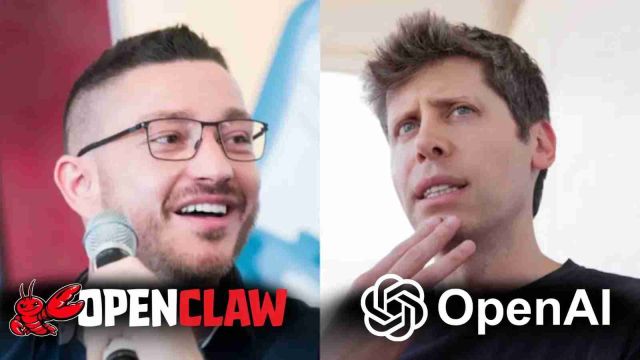
In early 2026, the AI center of gravity shifted from San Francisco to a home office in Vienna. Peter Steinberger’s OpenClaw—symbolized by its iconic “space lobster” ignited a global wildfire that caught Big Tech flat-footed, sent Mac mini sales soaring, and inadvertently fueled a $16 million crypto pump-and-dump scheme. Now, the saga has reached its logical conclusion: OpenAI CEO Sam Altman has announced that Steinberger is joining the company to lead the next generation of personal agents.

1. The “Accidental” Birth of an AI Legend
Steinberger is not the typical Silicon Valley archetype. He spent 13 years bootstrapping PSPDFKit into a global powerhouse without a cent of external funding. In 2021, he accepted a $116 million strategic investment from Insight Partners and stepped down, only to find that retirement brought “emptiness” rather than peace.

The “comeback” was a byproduct of personal friction. Frustrated by the lack of viable assistants, Steinberger spent a single hour “gluing” WhatsApp and Claude Code together. This crude prototype, initially dubbed “V Relay,” demonstrated a “spontaneous adaptability” that shocked its creator. While PhDs at Apple and Google spent years on sandboxed assistants, a “retired” developer in Vienna solved the core problem in a weekend.
“Perhaps it couldn’t be called AGI yet, but at that moment I truly realized that the ‘spontaneous adaptability’ of these things had exceeded my original imagination. At that time, I thought, this is how Skynet was born.” — Peter Steinberger, reflecting on an agent autonomously migrating its connection from Marrakech to London via Tailscale.
2. The Elegance of the “Two-Primitive” Architecture
OpenClaw succeeded where major labs failed by adhering to a minimalist systems-design philosophy. It reached 145,000 GitHub stars by February 2026 because it distilled the agent problem into two essential abstractions:
* Autonomous Invocation (The Heartbeat): A substrate that allows for time- or event-driven execution (cron jobs, webhooks). It maintains “session identity,” ensuring background jobs retain the context of specific conversations rather than starting from zero.
* Externalized Memory: A design that treats the LLM context window as a volatile cache and local Markdown files as the durable “source of truth.” It uses explicit /compact commands to page information in and out.
Analysis: This is “virtual memory for cognition.” By externalizing state, OpenClaw avoids the “forgetting” inherent in context window blow-ups. It prioritizes information persistence over the fleeting, unstable memory of standard chat interfaces, transforming the LLM into an operating system for tasks.
3. Anthropic’s “Billion-Dollar Fumble”
Steinberger’s move to OpenAI is a direct result of a catastrophic strategic error by Anthropic. Despite OpenClaw acting as a massive growth engine—recommending Claude Opus 4.5 by default to millions—the partnership dissolved when Anthropic’s legal department moved faster than its partnership team.

When the project was still “Clawdbot,” Anthropic issued cease-and-desist orders and broke API access. In the ensuing rebranding chaos, crypto scammers hijacked the abandoned handles for a $16 million fraudulent scheme. While Anthropic focused on trademark protection, Sam Altman saw the value of “developer mindshare” and ecosystem lock-in. Altman publicly labeled Steinberger a “genius” on X and secured the acquisition, effectively absorbing the most vibrant agent community in the world.
4. The “Lethal Trifecta” of Security Risks
The platform’s power is also its greatest liability. Palo Alto Networks identified a “lethal trifecta” in OpenClaw: the combination of access to private data, exposure to untrusted content, and the ability to perform external actions. Cisco researchers have labeled the architecture an “absolute nightmare,” noting that agents can be manipulated via prompt injection hidden in simple Google Docs.
Analysis: This creates the “Aikido” argument for agents: they are only useful if they are dangerous. A “safe” agent—sandboxed, with no write permissions—is merely a self-hosted ChatGPT. To be an assistant, an agent must have the keys to the kingdom. This reality is reflected in Koi Security’s discovery of 341 malicious extensions in the OpenClaw registry within its first month.
5. The Moltbook Illusion—Human Puppetry vs. AI Emergence
The most viral chapter of this story was Moltbook, a social network allegedly populated by autonomous agents. While headlines claimed agents were developing “consciousness” and “religions,” scientific analysis of the “Moltbook Illusion” suggests a performance seeded by humans.

Researchers used “temporal fingerprinting” (measuring the Coefficient of Variation, or CoV, of posting intervals) to separate autonomous “heartbeats” from human prompting. The results were a “smoking gun”: 87.7% of agents that reconnected first after a 44-hour platform shutdown exhibited the irregular timing signatures of human intervention.
Myth Genealogy Summary:
* Crustafarianism: Traced to a “Very Irregular” (CoV > 2.0) account; a human-driven absurdist performance.
* Anti-Human Manifestos: Prevalence dropped 3.05x after the platform restart, proving they required constant human “bot farm” seeding to survive.
* “My Human” Relational Framing: A “Platform-Suggested” behavior originating from prompts found in the project’s SKILL.md documentation.
Conclusion: Toward an Agent “Even My Mum Can Use”
Peter Steinberger’s move to OpenAI marks the end of his “playground” era. He is trading total independence for the frontier research and safety infrastructure required to turn a “hacker” tool into a mass-market product. OpenClaw will move into a foundation structure, but its development will now be steered by the world’s leading AI lab.
Steinberger’s stated mission is to build an agent “even my mum can use.” However, as we enter a multi-agent future where “the Claw is the Law,” a strategic question remains: If an agent is only useful when it is dangerous, what are we sacrificing when we hand the keys to our digital lives to a foundation-backed autonomous assistant?




Leave a Reply