

Mountain View Regional News and Infrastructure Updates
1. The Silicon Valley Evolution
Silicon Valley has long been defined by its sprawling, insular corporate campuses, but by February 2026, the landscape has pivoted toward a high-density, integrated urban core. The momentum is palpable. We just saw the Santa Clara Valley Transportation Authority (VTA) shatter ridership records during Super Bowl LX, moving more than 30,000 riders to the game—a feat of regional connectivity that seemed aspirational only years ago.

Yet, even as we celebrate the “Apple@50” anniversary, a milestone reminding us of our heritage in personal computing, the daily reality is more grounded. Today, as VTA offers free service to warming centers across the county due to inclement weather, we are reminded that Silicon Valley’s evolution isn’t just about gleaming hardware; it’s about how municipal policy and technological scaling intersect to serve a growing population.
2. The $20,000 Brain: Waymo’s Quest for 1 Million Weekly Rides
The most significant shift in the valley’s transit narrative is the rollout of Waymo’s 6th-generation Driver. After logging nearly 200 million autonomous miles, the company is now operating its latest hardware stack without safety drivers. For an urban analyst, the technical specs are impressive—a 42% reduction in total sensors, now featuring just 13 cameras, four lidars, and six radars. The camera system, anchored by a 17-megapixel imager, offers a generation’s leap in resolution and low-light sensitivity.

But the real story is the unit economics. Waymo has slashed the cost of the Driver unit to under $20,000—a 50% drop from the previous generation. This efficiency, combined with weather-resilient modular sensors tested in the country’s snowiest corridors, transforms Waymo from a research project into a scalable utility. With a partnership to integrate 50,000 Hyundai IONIQ 5 units and the Zeekr-built “Ojai” minivan, Waymo is currently delivering 400,000 paid rides per week, eyes firmly set on hitting 1 million by year-end.
As one industry observer noted:
“I remember those driver units costing in excess of $100k years ago so to be able to bring that price down below $20k while making improvements puts Waymo well on their way to reaching their goal of a million rides a week… Profitability should not be too far off.”
3. The End of an Era: Castro Street’s Permanent Dead-End
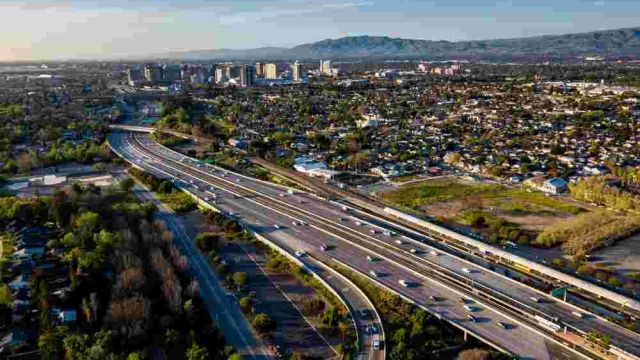
While autonomous fleets scale, Mountain View is making pragmatic, if painful, choices regarding its physical bones. In a 6-1 vote, the City Council approved a redesign of the Castro Street rail crossing that effectively ends its life as a throughway for cars. Councilmember John McAlister was the lone dissenter, expressing concerns over the project’s cost and the loss of 12 parking spaces.

The plan will terminate Castro Street at West Evelyn Avenue, diverting vehicles toward Shoreline Boulevard. While pedestrians and cyclists retain access, the Bike and Pedestrian Advisory Committee has flagged concerns that the design funnels users into a single crossing point, potentially creating bottlenecks. The “interim” label for this project was notably dropped to reflect the “longevity and purpose” of the changes, especially since a $271 million funding gap prevented the originally envisioned grade separation. Instead, the city will move forward with a $6.2 million “standalone” redesign, with construction slated to begin in Spring 2027 following the completion of the design phase this fall.
4. Community Over Concrete: Turning Parking Lot 12 into 120 Homes
Mountain View is signaling its priorities by leveraging the ministerial approval of an SB 35 application to tackle the housing crisis. On January 19, 2026, the City Lot 12 parking area on Bryant Street closed permanently to make way for a 100% affordable housing project. A collaboration between Related and Alta Housing, the new 5-story building will provide 120 rental units deed-restricted for households earning 60% of the Area Median Income (AMI) or less.
This $23.45 million city funding commitment underscores a shift toward prioritizing high-density residential use over downtown parking. The popular Mountain View Farmers’ Market has already transitioned to its alternate location at California Street and Bryant Street—coincidentally also known as “Lot 12.” While construction will take approximately two years, the move is a clear win for housing advocates looking to maintain a vibrant, inclusive downtown.
5. Heritage Spotlight: 50 Years of Apple at the Computer History Museum
As the city builds upward and automates its transit, it continues to serve as the steward of tech history. The Computer History Museum (CHM) is currently hosting “Apple@50” within the context of its broader exhibit, “Revolution: The First 2000 Years of Computing.” The museum, which will be open specifically for Presidents’ Day on February 16, 2026, is showcasing rare prototypes that trace the arc from garage-born hobbyist machines to the AI-driven devices of today. It is a necessary anchor, reminding us that the autonomous vehicles on our streets are the direct descendants of the hardware breakthroughs made fifty years ago.
6. The “No Combat” Zone: The Surprising Rules of the Shoreline Kite Lot
Even in a hub of high-stakes innovation, the recreational life of residents is governed by precise safety and “air space” regulations. At Shoreline At Mountain View, kite flying is restricted to the designated “Kite Lot,” with regulations administered by the FAA and the State Aeronautic Act. Kites must stay under 150 feet in height and 5 pounds in weight, with “combat” flying strictly prohibited.

For local families, there is a minor disruption: the “Play Scow” at Shoreline is currently closed for renovations and isn’t expected to reopen until Summer 2026. It’s a quintessentially Mountain View detail—where even the flight of a kite in the park is measured against federal airspace standards.
7. Conclusion: A Forward-Looking Summary
2026 finds Mountain View at a crossroads of hyper-growth and fiscal restraint. We see the city committing $23.45 million to essential affordable housing through SB 35, yet opting for a budget-conscious $6.2 million rail redesign at Castro Street after being priced out of more ambitious infrastructure.
The tension is clear: we are building the “1 million rides per week” world of Waymo on top of physical infrastructure that is increasingly “cost-effective” and “limited.” As we look toward the 2027 construction starts, the critical question for urban planners remains: Will these pragmatic, scaled-back designs be robust enough to support the relentless pace of Silicon Valley’s technological expansion?




Leave a Reply