

The Path to Transparency: A 50-Year Chronology of the Epstein Legal and Professional Arc

1. Foundations and Early Transitions (1974–1981)
The professional trajectory of Jeffrey Epstein began within the elite educational corridors of Manhattan, representing a stark departure from his middle-class Brooklyn origins. Despite the absence of a university degree—having withdrawn from both the Cooper Union and New York University’s Courant Institute—Epstein was recruited in 1974 by Headmaster Donald Barr to teach physics and mathematics at the Dalton School. This period served as the foundational stage for his transition into high finance, as he leveraged proximity to the institution’s wealthy parent body to secure entry into Wall Street.
- The Dalton School (1974–1976): Physics and Mathematics Instructor.
- Bear Stearns (1976–1981):
- Junior Assistant to a Floor Trader.
- Options Trader (Special Products Division).
- Limited Partner (Promoted 1980).
Epstein’s metamorphosis from a dismissed educator (terminated for “poor performance”) to a limited partner at a preeminent investment bank within four years marks a sophisticated professional pivot. This ascent was predicated less on traditional credentials and more on strategic social maneuvering, specifically the targeting of the bank’s ultra-high-net-worth clients for specialized tax mitigation strategies.
The conclusion of Epstein’s tenure at Bear Stearns was precipitated by a “Reg D violation” in 1981. This regulatory breach forced his departure and catalyzed the establishment of his own boutique consulting operation, shifting his focus toward private wealth management and “financial troubleshooting.”
2. Financial Ascent and High-Stakes Complexity (1982–1996)
Between 1982 and the mid-1990s, Epstein transitioned from a “financial bounty hunter” to an architect of complex multi-billion-dollar estates. This era was defined by his integration into the mechanics of both legitimate elite finance and significant fraudulent schemes.
| Financial Entity | Primary Activity / Outcome |
| Intercontinental Assets Group (IAG) | Established in 1981; specialized in the recovery of embezzled funds for sovereign and private ultra-wealthy clients. |
| Towers Financial Corporation | A debt collection agency later exposed as a $450 million Ponzi scheme; Epstein served as a consultant and was described in court documents as an intimate participant. |
| J. Epstein & Company | Formed in 1988 to manage assets for a strictly billionaire clientele; key anchors included Leslie Wexner (200 million in fees)** and **Leon Black (170 million in fees). |
| Financial Trust Company | The successor to J. Epstein & Company, relocated to the U.S. Virgin Islands in 1996 to exploit local tax incentives and jurisdictional opacity. |
The 1996 relocation to St. Thomas represented a masterclass in jurisdictional arbitrage. While the top marginal U.S. tax rate stood at 38.5%, Epstein’s corporations secured an effective rate of just 4%. This 34.5% delta, combined with the U.S. Virgin Islands’ status as an offshore haven that remained within the U.S. banking system, provided a dual shield of financial efficiency and regulatory distance.
The immense capital amassed during this period provided the “financial shield” that would later enable the assembly of a formidable legal defense team when his private misconduct first collided with the justice system.
3. The First Criminal Collision: Florida (2005–2011)
In 2005, an investigation by Palm Beach police into the abuse of a 14-year-old girl revealed a systemic pattern of exploitation involving dozens of victims. However, the subsequent legal proceedings resulted in the 2008 Non-Prosecution Agreement (NPA), a resolution widely viewed by legal historians as a failure of institutional accountability.
The “Three Levels of Lenience” (2008 Deal):
- State-Level Plea: Epstein was permitted to plead guilty to two state felony counts of solicitation of prostitution, effectively suppressing a 53-page, 60-count federal indictment.
- The Work-Release Program: Though sentenced to 18 months, he was housed in a private, unlocked wing of the county jail and allowed to leave for 12 hours a day, 6 days a week to work at his private office.
- Broad Immunity: The NPA granted absolute immunity not only to Epstein but also to four named co-conspirators and any “potential co-conspirators,” halting the ongoing FBI investigation.
The primary strategic benefit of the 2008 deal was the definitive cessation of the federal probe. U.S. Attorney Alexander Acosta, who brokered the deal, reportedly informed the Trump transition team in 2017 that he had been told Epstein “belonged to intelligence” and was “above his pay grade,” a justification that effectively sealed the evidence for over a decade.
Following his release in 2010, Epstein aggressively deployed his wealth to rehabilitate his social standing, utilizing philanthropy and elite social hosting to regain access to the upper echelons of science and technology.
4. The Era of Surveillance and Global Influence (2012–2018)
During his “post-penal” years, Epstein pivoted toward the surveillance and technology sectors, increasingly focusing on the intersection of Israeli intelligence and private security.
- Surveillance Industry: Invested $40 million into Carbyne (formerly Reporty), a startup led by Amir Elihai and former Israeli PM Ehud Barak, featuring a board with Pinchas Bukhris (former commander of IDF cyber unit 8200).
- Geopolitical Facilitation: Arranged security initiatives for the governments of Ivory Coast and Mongolia, involving former Israeli intelligence officer Yoni Koren.
- Intelligence Networking: Leveraged relationships through the Handala hacker group released emails, which documented extensive interactions with Ehud Barak and outreach to tech figures.
- Elite Maintenance: Maintained contact with pivotal figures including Bill Gates (philanthropic outreach), Peter Thiel (security/investment), Elon Musk (corporate consultation), and Steve Bannon (media strategy).
Epstein’s “Black Books” and his meticulously wired residences suggest that he viewed information as a form of “leverage” for social preservation. By allegedly recording the private moments of influential figures, he sought to ensure his continued immunity through a system of mutual interest or potential blackmail.
This era of reconstructed influence was eventually dismantled by the 2018 investigative reporting of the Miami Herald, which exposed the systemic failures of the 2008 NPA and provided the political and legal momentum for federal intervention.
5. The Federal Reckoning and Death in Custody (2019–2022)
In July 2019, the Southern District of New York (SDNY) unsealed a federal indictment, leading to Epstein’s arrest at Teterboro Airport. This move signaled a shift from individual criminal culpability to a broader investigation into institutional failure.
| 2008 Conviction (State) | 2019 Indictment (Federal) |
| Charges: Procurement of a minor for prostitution. | Charges: Sex trafficking of minors and conspiracy. |
| Sentence: 13 months (Work-release). | Potential Penalty: Life imprisonment. |
| Jurisdiction: Palm Beach County, Florida. | Jurisdiction: Southern District of New York (SDNY). |
| Outcome: Early release; high-risk sex offender status. | Outcome: Bail denied; death in custody on August 10, 2019. |
The 2021 conviction of Ghislaine Maxwell for sex trafficking and conspiracy served as the primary legal proxy for Epstein’s unprosecuted crimes. Her sentencing provided the first judicial validation of the decades-long recruitment and abuse operation, filling the void left by Epstein’s death.
The death of the primary subject necessitated a pivot from a criminal trial to a mandate for total transparency, as the public demanded an accounting of both his network and the official misconduct that allowed him to operate.
6. The Shift Toward Public Disclosure (2023–2025)
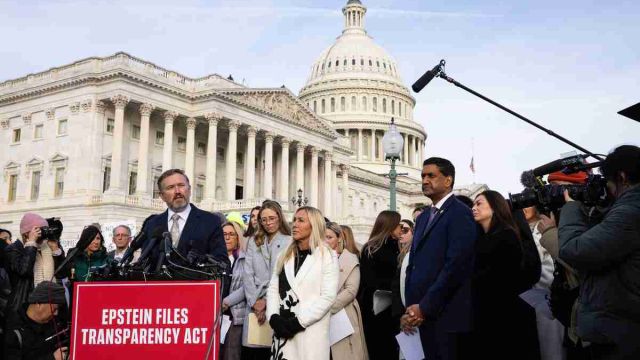
The aftermath of the criminal cases transitioned into civil and legislative accountability. In 2023, JPMorgan Chase agreed to pay $75 million to the U.S. Virgin Islands to settle claims that it enabled Epstein’s sex trafficking enterprise, with $55 million directed to victims and local charities. This paved the way for the Epstein Files Transparency Act, signed on November 19, 2025.
The 3 Most Critical Mandates of the Epstein Files Transparency Act:
- Searchable Production: The DOJ must publish all unclassified records, investigative materials, and communications in a searchable and downloadable format.
- Comprehensive Scope: Mandates the release of all flight logs, travel records, and documents related to the investigations of both Epstein and Maxwell.
- Reporting and Accountability: Requires a report to the House and Senate Judiciary Committees listing all records released or withheld, a summary of redactions (with legal basis), and a list of all government officials and politically exposed persons referenced.
This legislative momentum effectively terminated the procedural delays that had protected the “intelligence” and “private” files for decades.
7. Compliance and Final Production (January 2026)
On January 30, 2026, a memorandum signed by Attorney General Pamela J. Bondi and Deputy Attorney General Todd Blanche confirmed the Department’s compliance with the Transparency Act. This production represents the most significant disclosure of internal law enforcement materials in modern history.
Production Sources Checklist:
- [x] Florida and New York criminal cases (Epstein/Maxwell).
- [x] SDNY investigations into the 2019 death in custody.
- [x] Florida investigation into Epstein’s former butler.
- [x] Multiple internal FBI investigative files.
- [x] Office of the Inspector General (OIG) investigation.
The manual redaction of “victim-identifying information” was the primary hurdle in achieving the mandated transparency. More than 500 attorneys were deployed to balance public disclosure with survivor privacy, ultimately resulting in the release of 3.5 million pages (out of 6 million identified), alongside 2,000 videos and 180,000 images.

8. Conclusion: The Half-Century Legacy of the Epstein Cases
The trajectory of the Epstein arc represents a historical shift in the American legal system’s approach to elite misconduct. What began as a “private wing” jail sentence in 2008, shielded by political influence and secret agreements, has concluded in an era of unprecedented public disclosure.
Three Critical Insights for Students of History:
- The Intersection of Wealth and Law: The disparity between the 2008 and 2019 outcomes demonstrates how extreme financial resources and “intelligence” associations can delay, but not indefinitely prevent, federal prosecution.
- Journalism as a Legal Catalyst: The transition from systemic silence to federal charges was initiated not by the government, but by investigative journalism that revitalized the demand for institutional accountability.
- The Permanence of Public Record: The 2026 production proves that legislative mandates can force the disclosure of materials once deemed “above the pay grade” of prosecutors, ensuring that private misconduct eventually enters the permanent historical record.



Leave a Reply