
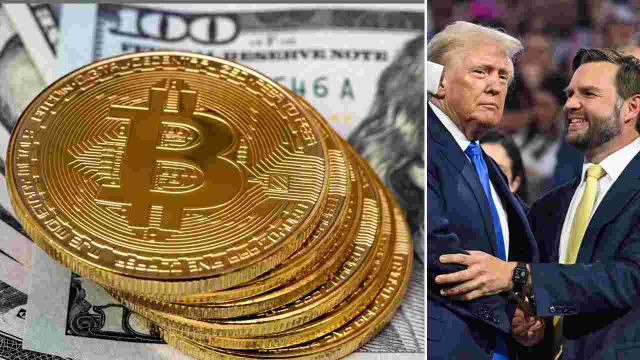

The Billion-Dollar Bug: 5 Surprising Realities of the First “Crypto Presidency”

In the history of political corruption, the mechanics of influence were traditionally bound by the laws of physics. During Donald Trump’s first term, foreign powers and special interests seeking favor were constrained by the friction of “space and time.” They could only rent so many rooms at the Trump International Hotel; they could only purchase so many units in a branded condominium tower. Emoluments were limited by occupancy rates and the physical reality of square footage.
But as the second Trump administration has demonstrated, the digital frontier has effectively liquidated these bottlenecks. We have entered the era of the “New Architecture of Influence,” where executive power is no longer merely a tool of governance, but the primary engine of a multi-billion dollar digital economy. By shifting the family business from brick-and-mortar assets to blockchain-based tokens, the administration has transitioned from million-dollar property deals to what a House Oversight Committee report characterizes as an “industrial-scale monetization of the federal government.”
Here are five surprising realities of how the first “Crypto Presidency” has fundamentally rewired the intersection of high finance and global statecraft.
——————————————————————————–
1. From Millions to Billions: The “Space-Time” Loophole
The transition from real estate to cryptocurrency represents a tectonic shift in the scale of presidential profiteering. In the first term, the foreign payments received by the President’s businesses were measured in millions. In the second, that wealth exploded to a peak paper value of nearly $10 billion.
The House Oversight report identifies this as a “shadowy pay-to-play scheme” with virtually no visibility. Unlike a hotel stay, which leaves a physical paper trail and is limited by capacity, digital assets allow for instantaneous, anonymous, and limitless transfers of value. To facilitate this, the administration utilized sophisticated mechanisms like the Digital Asset Treasury (DAT) model. Through a deal with Alt5 Sigma, which purchased $1.5 billion in tokens, the family established a “liquidity off-ramp,” allowing insiders to exit positions and realize gains without selling directly into the market and crashing the price.
“President Trump’s efforts to profit from the presidency were limited by the constraints of space and time… In his second term, however, President Trump and his family have found a way to grow their wealth exponentially, without such constraints.” — House Oversight Committee Interim Staff Analysis
The most insidious innovation is the USD1 stablecoin. Functioning as an “interest-free loan” from the public to the issuer, the Trump-affiliated venture World Liberty Financial (WLF) licenses its brand to BitGo. While users hold the token, the Trump family captures the yield on the Treasury-backed reserves. This generates an estimated $35 million in risk-free annual revenue, effectively turning the U.S. dollar’s stability into a private family annuity.
——————————————————————————–
2. The “Spy Sheikh” and the Secret 49% Stake
The most staggering revelation of foreign influence involves the United Arab Emirates (UAE). Investigative reports from the Wall Street Journal revealed that Sheikh Tahnoon bin Zayed Al Nahyan—the UAE’s national security adviser, known as the “Spy Sheikh”—acquired a secret 49% stake in World Liberty Financial for $500 million through his vehicle, Aryam Investment.
This was not a passive investment. On January 16, 2025, just four days before the inauguration, Eric Trump signed the deal that handed over nearly half of the family’s flagship crypto venture to the UAE’s intelligence chief. This partnership installed G42 executives Martin Edelman and Peng Xiao directly onto the WLF board, creating a direct “spy link” into the President’s private business.
The Anatomy of the UAE Deal
- The Investment: Aryam Investment paid $500M for a 49% stake in WLF.
- The Direct Payoff: $187 million was transferred to Trump entities and $31 million to Witkoff family entities just days before the inauguration.
- The Board Integration: G42 executives (Edelman and Xiao) took two of five board seats.
- The Policy Shift: In May 2025, the administration approved the export of 500,000 advanced Nvidia AI chips annually to the UAE.
- The National Security Risk: This approval reversed a Biden-era block imposed because the UAE continues to engage in joint military exercises with China, posing a critical risk of technology diversion.
——————————————————————————–
3. The “Loyalty Tax”: When Conviction Becomes a Losing Asset
While the administration’s inner circle saw unprecedented gains, the retail investors—many of them the President’s most ardent supporters—suffered through a textbook case of asymmetric risk distribution.
The TRUMP memecoin, launched on the eve of the inauguration, functioned as a “pump and dump” scheme where political loyalty was used as market liquidity. By July 2025, Trump-affiliated entities had captured more than **320 million in trading fees** from the coin. Meanwhile, the broader public was left with a collective loss estimated at $12 billion. This “identity shock” reflects a reality where 764,000 wallets lost money while a mere 58 wallets—likely those with “insider knowledge”—captured profits exceeding $10 million each.
“His cult is holding the bag with a collective 12 BILLION DOLLAR LOSS.” — Retail investor testimonial, cited in arXiv research paper
——————————————————————————–
4. The Pardon Pipeline: CZ and Justin Sun
The administration’s use of the pardon power has become inextricably linked to its digital balance sheet. Two high-profile cases suggest a corrupt quid pro quo involving global crypto billionaires seeking relief from federal law enforcement:
- Justin Sun: The Chinese billionaire invested a total of $75 million into WLF at a critical moment when the venture’s fundraising was stalled. Shortly after the administration took office, the SEC “paused” its long-standing enforcement action against Sun for securities fraud.
- Changpeng Zhao (CZ): The founder of Binance, who pleaded guilty to federal money-laundering charges involving transactions for illicit actors, was granted a full presidential pardon in October 2025. This followed a partnership where Binance provided the technical infrastructure and marketplace for WLF, a deal projected to generate tens of millions for the Trumps annually.
This “legal favoritism” suggests that the pardon power, once an instrument of mercy, has been leveraged to protect foreign financiers who directly enriched the executive’s family.
——————————————————————————–
5. The “Truth” Crash: The Fragility of Political Finance
The 2025 crypto boom met a violent end on October 10, 2025, revealing the inherent volatility of “political finance.” The collapse was not triggered by economic data, but by a single post on Truth Social.
When the President announced 100% tariffs on China via social media, it triggered a global “flash crash” driven by narrative reflexivity. Bitcoin plummeted from its peak of $126,000 to below $82,000, causing $19 billion in liquidations within 24 hours. The crash was exacerbated by oracle failures, where price feeds used by automated smart contracts became desynchronized, and exchange freezes that prevented retail investors from exiting while insiders utilized their “Digital Asset Treasury” off-ramps.
This event proved that assets tied to presidential signaling rather than economic fundamentals are fundamentally fragile. In this ecosystem, the White House communications office effectively functions as a market-making desk.
——————————————————————————–

Conclusion: Beyond the Ticker Symbol
The rise of the Crypto Presidency has ushered in a new monetary reality where attention is collateral and executive power functions as market liquidity. We are no longer observing a government that simply regulates the digital economy; we are observing a government that is the digital economy. By utilizing blockchain’s opacity to bypass traditional ethics and constitutional safeguards, the administration has turned the presidency into a high-frequency trading platform.
As the line between a political movement and a financial ecosystem continues to vanish, a fundamental question remains for the American public: Can the republic survive a governance model where the White House, the Constitution, and the rule of law are treated as volatile assets for sale to the highest digital bidder?


Leave a Reply