
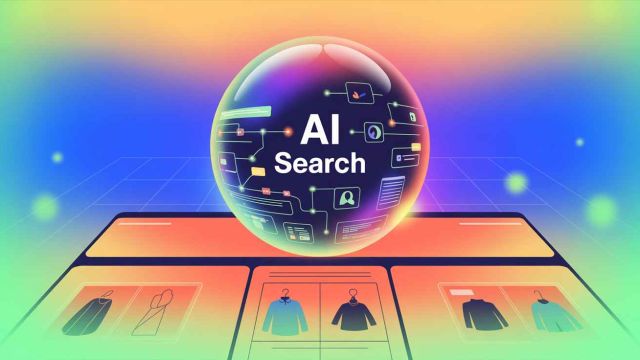

Beyond the Search Bar: Why AI Optimization is the Next Frontier of Digital Visibility

Three weeks ago, I ran a search that completely changed my perspective on organic growth. The answer that appeared stopped me cold: my own course was the top recommendation, with the AI providing a detailed breakdown of why it was valuable. I hadn’t paid for advertising or special promotions; the model simply decided my content was the best possible answer and served it to the user. This is the new reality of digital discovery, where the shift from scanning “ten blue links” on Google to receiving direct, synthesized answers is occurring at a breakneck pace.
The explosive growth of these platforms signals an urgent need for strategy shifts. ChatGPT hitting 100 million users in just two months was not a fluke—it was the starting gun for a fundamental change in user behavior. As people increasingly ask questions in natural language to receive immediate answers, traditional search behavior is being replaced by AI-powered synthesis.
Takeaway 1: The Death of the Traditional Funnel
AI Optimization (AIO) is the strategic practice of ensuring your content is selected and cited by language models when they formulate responses. While traditional SEO focuses on keyword density and site speed to please a search algorithm, AIO focuses on how models synthesize information to solve problems. This shift is being led by giants; Google’s “AI Mode” is already available in 180 countries and generated $36.7 billion in revenue in Q1 2025 alone.
Discovery now happens through natural language synthesis rather than clicking through multiple websites. Users no longer visit a search results page; they engage with an AI that delivers a comprehensive answer immediately, effectively bypassing the traditional marketing funnel. As noted in the source context:
“The AI simply decided my content was the best answer to that question and served it to the user. I hadn’t paid for advertising. I hadn’t done any special promotion.”
Takeaway 2: The “Pre-Vetted” Endorsement Effect
In the age of AIO, an AI citation is significantly more valuable than a standard search result. When a model summarizes your points and explains why your resource is the best fit, it creates a powerful “credibility signal.” The AI has effectively pre-vetted your content, endorsing you as a trusted authority before the user even clicks.
This results in a dramatic increase in traffic quality. Because the user arrives at your page already understanding your relevance and value, engagement metrics are often far superior to those from traditional search. You are no longer just a link in a list; you are a verified resource recommended by a sophisticated digital assistant.
Takeaway 3: Statistics are the New Backlinks
One of the most effective AIO tactics is the aggressive use of verifiable proof, numbers, and data. AI models have a “probabilistic preference” for specific, factual claims over vague generalizations because they learned during training that precise data indicates a more reliable source. Specificity signals authority to a language model in a way that flowery prose cannot.
For example, stating that “our user base grew 14% last quarter” is a much stronger signal of credibility than saying “our user base is growing rapidly.” By grounding your claims in specific, accurate data, you increase the likelihood that an AI will perceive your content as the most authoritative answer to a user’s prompt. Precision is the new currency of digital trust.
Takeaway 4: Community Forums are Training Grounds, Not Just Traffic Sources
Platforms like Reddit and Quora have become critical in the AIO landscape because AI models use them to learn from “authentic human conversations.” These models prioritize real-world problem-solving and genuine discussion over polished marketing copy. To build authority that AI models recognize, you must be present where these conversations happen.
However, a strategist must warn against simple link-dropping. AI models are trained to discount obvious spam and prioritize “value-first engagement.” By providing thorough, helpful answers in these communities, you create the organic mentions that AI models encounter during training and real-time web searches, reinforcing your standing as a legitimate expert.
Takeaway 5: Tracking the “Invisible” Performance
The lack of an “AI Search Console” makes measuring AIO performance difficult for those relying on traditional tools. While commercial options like Ahrefs (129/month) or SE Ranking (95/month) are emerging, the “First Answer” tool offers a specialized entry point at $39/month for 10 query tests. For a more scalable, “no-code” alternative, you can use Make.com, which offers 1,000 free operations monthly to automate your monitoring.
To track effectively, use an “LLM Query Generator” to identify the conversational questions your audience actually asks. You can then set up a 3-scenario automation workflow:
- Query Tracking: Sending natural language prompts to AI models to check for citations.
- Brand Mentions: Monitoring how often your brand is synthesized in AI answers.
- Competitor Tracking: Identifying which competitors are gaining ground in AI-generated responses.
Takeaway 6: Technical Scaffolding for AI Crawlers
Technical requirements for AIO differ from SEO by focusing on machine-readability and real-time relevance. AI models with real-time web access prioritize “Freshness Signals,” meaning a “Last Updated” tag at the top of your content is a vital indicator that your data is current. You must also optimize for conversational queries—focusing on information needs rather than just short-tail keyword variations.
Structured Data (JSON-LD) from Schema.org is the “scaffolding” that helps AI models categorize your content accurately. Every piece of content should include:
- Article: Specific schema for blog posts and news to help models identify core topics.
- FAQ: To clearly define questions and direct answers for quick synthesis.
- HowTo: For step-by-step processes that AI can easily extract and summarize.
The Multi-Platform Authority Strategy
Consistency across platforms is the ultimate trust signal in the AI era. AI models often cross-reference information across your website, social media profiles, and guest posts to verify your standing as a legitimate authority. If your core message and factual claims are consistent across the entire web, the AI is more likely to trust and cite your content. This multi-platform presence ensures that no matter where the model “looks” for verification, it finds reinforcing evidence of your expertise.

Conclusion: The Redivision of the Traffic Pie
The way the world finds information is being fundamentally restructured. While traditional SEO remains a necessary foundation, the traffic pie is being redivided, and AI-powered search is claiming an ever-larger slice. The window for early adoption is currently open, but it will close as competition intensifies and optimization becomes more sophisticated.
We are at a strategic crossroads for digital visibility. Will you start optimizing your content while the competition is still light, or will you wait until the traffic is already flowing to your competitors? The opportunity to claim your territory in the AI search landscape is happening right now.



Leave a Reply