
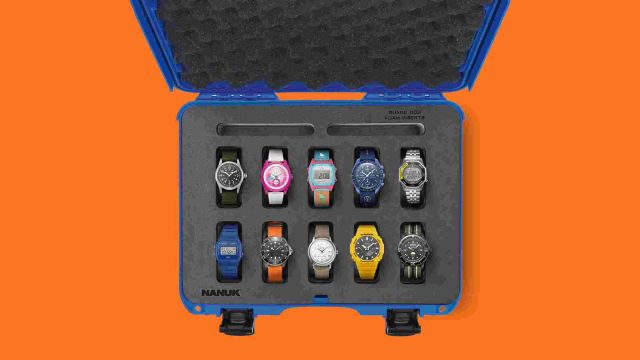

Beyond the Hype: 5 Surprising Truths About Building a High-End Watch Collection on a Budget

1. The Luxury Perception Gap
There is a persistent, if misguided, notion in the horological world that a “real” watch must carry a four- or five-figure price tag. This perception creates an artificial barrier for many aspiring enthusiasts, conflating prestige with mere cost. However, a deeper look into the “Watchmosphere” reveals a refreshing reality: exceptional design and genuine horological integrity are available at every price point.
The distinction between a budget-friendly piece and a luxury icon often rests on nuances of finishing, movement complexity, and brand heritage rather than the fundamental ability to keep time. For the discerning collector, the objective is to find a timepiece that offers a personal connection. As the saying goes, a $200 watch that you truly love will always provide more satisfaction than a $2,000 watch purchased simply to impress others. Most people, in truth, are not impressed by a logo; those who are may not be the company you wish to keep.
2. The 75/75 Rule: Navigating the “Consumer” Sweet Spot
To build a collection effectively, one must understand the counter-intuitive economics of the industry. The market is defined by a sharp “75/75” divide: consumer brands account for 75% of all watches sold annually, yet luxury brands capture 75% of total market revenue.
This means luxury houses sell far fewer units at massive premiums, often charging for the “prestige logo” rather than a proportional increase in technical value. For the collector on a budget, the “sweet spot” is the “Premium Consumer” tier. Brands like Seiko, Citizen, and Tissot offer mechanical movements and robust horological integrity for three-figure sums. These brands serve as a vital “onramp,” allowing you to experiment with different aesthetics—from the rugged Seiko Prospex Alpinist field watch to the refined Presage Cocktail Time—without a prohibitive financial commitment.
3. Avoiding the “Fashion Brand” Trap: The Performance of Horology
The primary cautionary tale for the burgeoning collector is the allure of the “fashion brand.” Often found in department stores, these watches prioritize the aesthetic of a timepiece over its build. These are usually licensed products, not aligned with a dedicated manufacture, offering what experts call “the performance of horology without actually bothering to have real horology.”
A classic example is the Michael Kors “chronograph,” which has been known to feature non-functional decorative pushers or subdial hands glued permanently to the dial. Such pieces carry significant markups for a logo that lacks horological weight. In contrast, the “Big 5” entry-level brands—Armitron, Casio, Orient, Swatch, and Timex—provide functional, reliable movements. Timex, in particular, pioneered this category by moving watches out of high-end jewelry stores and into “five and dime” stores, democratizing quality timekeeping. A $200 Orient or Citizen offers a true mechanical heartbeat, whereas a fashion watch is often just costume jewelry in disguise.
4. The “In-House” Advantage: Japanese Precision vs. Swiss Heritage
While Swiss movements are the industry’s traditional gold standard, Japanese in-house manufacturing offers technical capabilities that frequently outperform their European counterparts in raw precision. During the “Quartz Revolution,” Japan challenged Swiss dominance by focusing on practical, minimalist design and extreme reliability.
Today, this innovation continues at both ends of the spectrum. The Citizen 0100 movement, found in their premium line, is the most accurate quartz movement in the world, boasting a staggering tolerance of ±1 second per year. For the budget collector, Citizen’s automatic workhorses, like the Calibre 8210 found in the NJ0210 “Dress” and NJ022 “Diver-Style” series, offer reliable mechanical soul for under €250. While the 8210 has a broader accuracy range of -20/+40 seconds per day, it represents a “workhorse” philosophy. Minimalist, functional designs like the Seiko 7S26 are often more reliable for daily wear than high-maintenance luxury movements because they are built to be durable, simple to service, and resilient against the rigors of everyday life.
5. The Secret Story: Prestige Beyond the Price Tag
True prestige in a collection comes from the narrative a watch carries on the wrist. Many affordable timepieces possess historical or cultural weight that rivals the most exclusive brands.
Consider the Hamilton Khaki Field “Murph.” Known to cinephiles as “the watch that saved the world” in Interstellar, it was the tool used to communicate coordinates from another dimension via Morse code. Hamilton even printed the word “Eureka” in Morse code lacquer on the seconds hand as a tribute. Similarly, the STOWA Marine Classic 36 serves as a refined homage to 18th-century marine chronometers. Despite its accessible price, it features a hand-wound ETA Peseux 7001 movement with a “top-grade” finish, including Geneva stripes (Côtes de Genève) visible through a sapphire case back.
This focus on the craft is what the British Horological Institute (BHI) champions. Their holistic approach “teaches not just how to service but how to make and replace pretty much any component.” When you wear a watch with a story or a visible legacy of finishing, you are wearing a piece of horological history that transcends its cost.
Conclusion: The Five-Watch Framework and Your Next Move
To build a foundational collection that lasts a lifetime, collectors should follow the “GADA” (Go Anywhere, Do Anything) philosophy. This ensures versatility across all life’s requirements. For those managing a budget, a balanced allocation strategy is key:
- Everyday (30% of budget): The flexible, GADA cornerstone.
- Tool (30% of budget): A diver, pilot, or field watch with functional complications.
- Dress (15% of budget): A sedate, elegant piece for formal occasions.
- Beater (10% of budget): A durable piece like a Casio or Timex for high-impact activity.
- Statement (15% of budget): A wild card that showcases your unique personality.

As you embark on your next acquisition, ignore the hype of the “prestige logo.” Ask yourself: does this watch tell a story? Does it possess horological integrity? The most rewarding collections are not those that cost the most, but those built with curiosity, an eye for value, and a genuine love for the craft.




Leave a Reply