
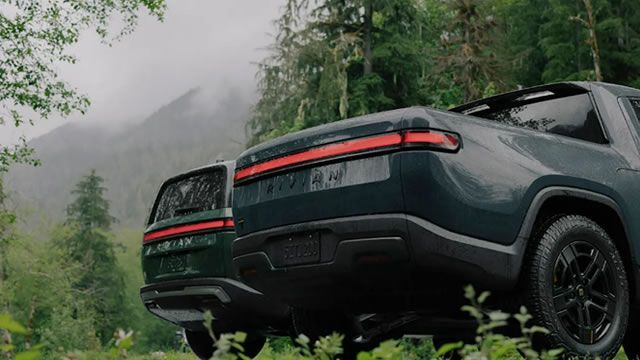

Rivian’s R2 Reality Check: Geopolitics, Obsolescence, and the $45,000 Marketing Mirage
1. Introduction: The Breadcrumb in the Browser
In the days leading up to the Rivian R2’s official reveal, a subtle but seismic shift occurred on the company’s website. The prominently featured “$45,000 starting price” was quietly scrubbed, replaced by a cryptic countdown. For the astute industry analyst, this wasn’t just a marketing update; it was a white flag.
The reality check for Rivian is twofold. First, the geopolitical landscape has shifted beneath the company’s feet: the outbreak of war with Iran on February 28, 2026, and the subsequent closure of the Strait of Hormuz, has sent shockwaves through the supply chains of critical partners like Samsung and Bosch. Second, what was promised as a “relatable” EV for the masses has transformed into a strategic exercise in survival. While the R2 is technically arriving, the version that captured the public’s imagination is slipping further into the horizon, shadowed by external volatility and internal financial pressure.
2. The “Shortly Thereafter” 18-Month Gap
During the long lead-up to this launch, CEO RJ Scaringe leaned heavily on the phrase “shortly thereafter” to describe the arrival of the base R2 following its premium siblings. We now have a concrete definition for that window: 18 months. While the first Performance units will roll off the line this spring, the $45,000 base model is now anchored in late 2027.
Scaringe’s commitment to the price point remains on the record, but the context has changed. In a February 2026 interview with CNBC, he stated:
“The top-line number, the starting price of $45,000, has to be achieved. And we have to do it profitably.”
For reservation holders who have been waiting since the initial 2024 reveal, “shortly thereafter” has become a three-and-a-half-year odyssey. In the fast-moving EV sector, a delay of this magnitude is not merely a scheduling hiccup; it is a risk to the brand’s relevance as the market matures and competitors consolidate their leads.
3. The Hardware Divide: The 6-Month Obsolescence Window
Potential buyers face a daunting technological dilemma. The R2 units launching in the spring and summer of 2026 will be equipped with Rivian’s Gen 2 hardware. However, Rivian has already confirmed that by late 2026, production will pivot to the “Gen 3 hardware stack.”
This Gen 3 configuration is a fundamental leap, integrating LiDAR sensors and custom-designed RAP1 autonomy chips intended to replace third-party silicon. This creates a precarious “early adopter penalty.” Those who take delivery in the first half of 2026 are essentially purchasing a vehicle with an obsolete hardware stack within six months of ownership. With no hardware retrofits planned, the first wave of R2 owners will find themselves stranded on the wrong side of the autonomy divide, missing the very features like the “Autonomy+” hands-free suite that Rivian is banking on for future revenue.
4. The $45,000 Trade-off: Measuring the Value Gap
Rivian’s struggle to maintain the $45,000 headline price has resulted in a “Standard” trim that faces a grueling comparison with the Tesla Model Y. While the R2 base model targets “more than 275 miles” of range, it enters a market where the entry-level 2026 Tesla Model Y offers 321 miles for $39,990 a full $5,000 less than Rivian’s projected base.
Furthermore, the value proposition is under siege by the loss of the $7,500 federal EV tax credit, which was eliminated last September. Rivian is attempting to fill this “Value Gap” with brand “soul” fold-flat camping seats, a retractable rear window, and an adventure-ready aesthetic. However, as geopolitical tensions drive component costs higher, the question is whether these lifestyle features can outweigh a significantly lower range-per-dollar ratio compared to the industry leader.
5. Following the Tesla Playbook: Financial Desperation as Strategy
Rivian’s launch sequence is a mirror image of the strategy Tesla used for the Model 3: prioritize high-margin variants to generate immediate cash flow. However, where Tesla was scaling up, Rivian is stemming a hemorrhage. With over $24 billion in cumulative losses including $5.4 billion in 2025 alone this sequence is less of a strategic choice and more of a financial necessity.
Observers should note that the $35,000 Model 3 was quietly discontinued shortly after its delayed launch. There is a very real possibility that the $45,000 R2 is a “marketing mirage,” designed to keep the 68,000+ reservation holders in the queue until they can be upsold to more profitable trims.
The R2 Launch Sequence (Including $1,495 Destination Charge):
| Trim Level | Total Price | Expected Delivery | Key Features |
| Performance (Launch Pkg) | $59,485 | Spring 2026 | Launch Green, Lifetime Autonomy+ |
| Premium | $55,485 | Late 2026 | 330-mile range, Gen 3 Hardware |
| Standard (Standard RWD) | $49,985 | First Half 2027 | 345-mile range (Large Battery) |
| Standard (Base Model) | $46,495 | Late 2027 | 275+ mile range (Small Battery) |
6. The Automation Wildcard: Mind Robotics
Perhaps the most critical, yet overlooked, part of the R2 story is “Mind Robotics,” the Scaringe-led AI spin-off that recently secured $500 million in Series A funding. This is not a side project; it is the infrastructure for Rivian’s survival.
Rivian serves as a “data flywheel” for Mind Robotics, providing the high-stakes manufacturing environment needed to train AI-powered robots in “reasoning-intensive” tasks. If Scaringe’s bet on industrial AI pays off, the R2’s profitability won’t come from battery chemistry alone, but from the radical automation of the Normal, Illinois plant. The success of the R2 depends on robots capable of physical reasoning to lower production costs to a level where a $45,000 SUV doesn’t result in a net loss per unit.
7. Conclusion: A Ponderable Future
Rivian is attempting the most difficult maneuver in the automotive industry: transitioning from a niche luxury player to a high-volume manufacturer during a period of global instability and slowing EV demand. The R2 is a compelling product, but the path to its mass-market “Standard” trim is littered with caveats.
As we look toward late 2027, the central question for the industry isn’t whether Rivian can build a beautiful SUV we know they can. The question is whether the market will still be waiting for a $45,000 adventure vehicle three years from now, or if the “value gap” and the specter of hardware obsolescence will drive buyers toward more established, affordable alternatives. Rivian has the soul; now it just needs the time and the margins to survive.


Leave a Reply