
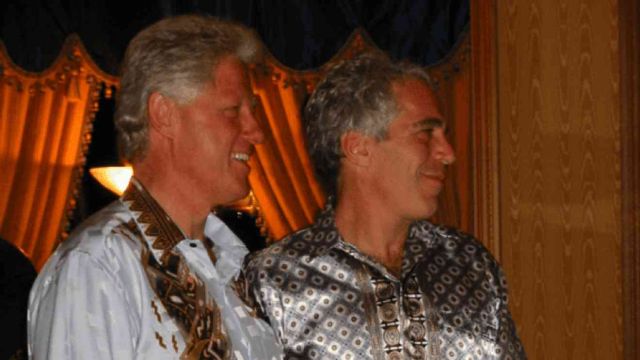

Inside the Chappaqua Depositions: 6 Surprising Takeaways from the Clinton-Epstein Testimony
The wealthy hamlet of Chappaqua, New York, is usually a study in suburban serenity, but in February 2026, it became the epicenter of a historic legal collision. Behind Secret Service barricades and metal fencing at the Chappaqua Performing Arts Center, a decades-long mystery finally met the weight of congressional authority. For the first time in American history, a former president was compelled by a duly issued subpoena to answer for his private associations. It was a moment that transformed the “Lolita Express” once a whispered legend of the global elite into the grim subject of a closed-door federal deposition.
1. The End of Presidential Immunity?
The path to Chappaqua was paved with what the House Oversight Committee described as “contumacious conduct.” Following five months of procedural dead ends, the Committee issued a formal “Resolution Recommending… Contempt of Congress” in January 2026. This report detailed how Bill and Hillary Clinton initially defied subpoenas, attempting to lean on the traditional, if unwritten, shields of the former presidency.
The Mazars Standard and the Rule of Law In the deposition, legal counsel navigated the “Mazars” standard, a precedent regarding the separation of powers and the scope of congressional inquiries into a president’s private information. While the Clintons’ attorneys argued that the inquiry was a “kangaroo court” designed for harassment, the Committee successfully asserted its legislative purpose: to investigate federal mismanagement of the Epstein files and propose ethics reforms for the “connected class.” Bill Clinton, sensing the shifting legal tide, eventually framed his appearance as a testament to democratic values:
“America was built on the idea that no person is above the law, even presidents – especially presidents.”
2. The “Lolita Express” as a Humanitarian Hub
The deposition provided a rare window into the logistics of the Clinton Foundation’s early years. At the heart of the questioning were the flights Bill Clinton took on Jeffrey Epstein’s private Boeing 727. An investigative tension emerged over the scale of this travel: the House Oversight Committee identified 26 distinct flight segments between 2002 and 2003, while Clinton’s team maintained these represented only four extended humanitarian trips.
The Larry Summers Connection In a notable investigative reveal, Clinton identified his former Treasury Secretary, Larry Summers, as the individual who introduced him to Epstein in 2001 or 2002. Clinton characterized the relationship as purely transactional a trade of “political and economic insights” for the use of Epstein’s jet to combat HIV/AIDS in Africa. However, this defense was complicated by newly released DOJ files. The Committee pressed Clinton on a specific finding from the Contempt Resolution: a report of him receiving a massage from one of Epstein’s victims during these very foundation trips. Clinton maintained his innocence, claiming he “saw nothing” and “did nothing wrong” despite the high-altitude proximity to Epstein’s illicit operation.
3. The Hot Tub Photo and the Brunei Defense
The digital age has made 20-year-old photographs the most dangerous artifacts in a deposition. Committee members confronted the former president with a viral image from the DOJ files showing him in a hot tub with an unidentified woman.
Speculation Under Oath Clinton’s defense was a masterclass in measured legal deflection. He testified that the photo was taken during a legitimate Foundation trip to Brunei and denied any sexual activity or personal knowledge of the woman pictured. When pushed for specifics, Clinton invoked a “lack of memory,” stating he would not “speculate or guess” about interactions from decades past. This “Brunei Defense” highlights the difficulty of seeking criminal accountability in 2026 for events that occurred at the turn of the millennium a gap where memory fades but digital evidence remains indelible.
4. Pressure at Vanity Fair: Protecting a “Good Friend”
One of the most damning allegations probed by the Committee was the claim that Bill Clinton used his immense post-presidential influence to shield Epstein. Court documents from the Virginia Giuffre lawsuit suggest that Clinton personally pressured Vanity Fair to kill sex-trafficking exposés in the early 2000s.
The Shield of the Insider Class The Oversight Committee highlighted this as a primary reason for the deposition, investigating whether the former president’s stature served as a functional armor for Epstein. By supposedly threatening the magazine to protect his “good friend,” Clinton is accused of perpetuating the very “insider class” culture that allowed Epstein to operate with impunity for years. This takeaway underscores the Committee’s focus on how elite relationships can obstruct the pursuit of justice, regardless of the humanitarian work being performed in the foreground.
5. UFOs, Pizzagate, and the Partisan “Sideshow”
Hillary Clinton’s six-hour deposition was characterized by sharp exchanges and what she described as “theatrics.” While the investigation’s core was sex trafficking, the questioning frequently veered into the bizarre, covering topics from the debunked “Pizzagate” conspiracy to the existence of UFOs.
The Boebert Incident and Missing Files The decorum of the proceedings shattered when Representative Lauren Boebert leaked a photo of the closed-door session to a conservative podcaster. A visibly angry Hillary Clinton reportedly halted the testimony, telling the panel, “I am done… You can hold me in contempt from now until the cows come home.”
Simultaneously, Democrats on the committee, led by Representative Robert Garcia, attempted to pivot the focus. They raised the issue of “missing FBI files” concerning sexual abuse allegations against Donald Trump, arguing that the Republican-led focus on the Clintons was a diversion from Trump’s own 38,000 mentions in the Epstein records. This takeaway illustrates how the search for truth is often held hostage by the mechanics of partisan warfare.
“Because I started being asked about UFOs and a series of questions about Pizzagate, one of the vilest bogus conspiracy theories.”
6. The “Childlike Curiosity” Birthday Note
Perhaps the most impactful piece of evidence discussed was a handwritten note Clinton contributed to an album for Epstein’s 50th birthday in 2003. In his “distinctive scrawl,” Clinton praised Epstein for his “childlike curiosity” and noted the “solace of friends.”
The Narrative Contradiction For a legal analyst, this note is the “smoking gun” of personal rapport. It stands in stark contrast to Clinton’s deposition testimony, where he described the relationship as “cordial” but not a true friendship. The intimate language of the note provides a rare, unvarnished look at a bond that both parties later sought to characterize as purely professional. It remains a haunting artifact an expression of warmth toward a man who was, at that very moment, according to investigators, operating a global trafficking enterprise.
Conclusion: The Accountability Gap
The Chappaqua depositions leave the public with a profound sense of unresolved tension. While Bill and Hillary Clinton have now fulfilled their legal obligation to testify resolutely maintaining they “saw nothing” the investigation is far from settled. The public record now contains millions of pages of documents, flight logs, and emails that are still being parsed by investigators and journalists alike.
The primary takeaway from this historic week in February 2026 is the persistent “Accountability Gap.” When the legal process concludes for the connected class, and the “saw nothing” defense is entered into the record, the question remains: Does justice actually begin for the victims, or does the power of influence simply allow the elite to exit the hot seat with their reputations and their secrets intact?




Leave a Reply