

The $26 Trillion Buffer: Why the 2026 Middle East Conflict Hasn’t Broken the Market (Yet)
1. The Hook: Headlines vs. The Yield Curve
On February 28, 2026, the geopolitical “Artery of the World” was severed. Following precision U.S. and Israeli strikes that effectively incapacitated the Iranian conventional navy, the global energy market braced for a cataclysm. By March 2, tanker traffic through the Strait of Hormuz the “aorta” of global energy circulation had ground to a functional halt. In any prior decade, this would have been the precursor to a systemic financial seizure.
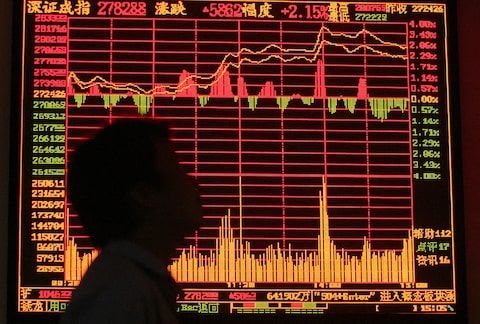
Yet, the charts tell a story of defiance. While Brent crude briefly spiked 9% to touch the high $70s and the Dow Jones Industrial Average endured a 600-point intraday tremor, the panic failed to metastasize. The S&P 500 ended the first high-tension sessions essentially flat. This disconnect between the “fear-inducing” headlines of a regional war and the measured reaction of global capital raises a critical question for the strategist: Why has the global economy remained so resilient in the face of an unprecedented energy blockage? The answer is found in a massive liquidity firewall, a new class of “synthetic” growth stabilizers, and a structural shift toward a permanent war economy.
2. The Invisible Safety Net: $26 Trillion in “Sideline” Capital
The most formidable defense against market contagion today is the historic $26 trillion cash pile currently held in money market funds and cash assets. Counter-intuitively, the high-interest-rate environment of 2024–2025 frequently maligned as a headwind for growth has served as the ultimate endogenous stabilizer. It incentivized a massive accumulation of “dry powder” that now acts as a psychological and structural floor, preventing the “forced deleveraging” that typically accelerates market crashes.
According to analysis from Cetera Investment Management, the absence of credit stress or systemic liquidity events is the defining feature of this crisis. The sheer volume of sideline capital ensures that any dip is met with a massive reservoir of ready buyers, rather than a chain reaction of margin calls.
“Historically, sharp market drawdowns are typically associated with forced deleveraging, credit stress, or systemic liquidity events. We do not believe those conditions exist at this time. … Ample liquidity remains on the sidelines… This sideline capital can act as a stabilizer during periods of volatility rather than exacerbating downside moves.” Cetera Investment Management, March 1, 2026
3. The “Tale of Two Shocks”: Why GVCs Are the Real Enemy
While the public remains fixated on oil prices, central bankers, led by the ECB’s Philip Lane, are preoccupied with a more insidious threat: Global Value Chain (GVC) shocks. The 2026 conflict has highlighted a fundamental divergence in how different supply shocks transmit through the economy:
- Energy Shocks (Localized/Transitory): These act as a “tax” on consumption. While they spike headline inflation, they are essentially demand-dampening and contractionary. This dampening effect often pulls prices back down naturally as economic activity slows, allowing central banks to “look through” the volatility.
- GVC Shocks (Persistent/Broad-based): These are far more dangerous because they disable the economy’s “automatic stabilizers.” When supply chains for core inputs are severed, firms face a physical constraint on production. Unlike an energy shock, where a drop in demand might lower prices, a GVC shock forces prices higher to clear the market because the productive capacity of firms is fundamentally compromised.
As the ECB’s December 2023 scenario analysis warned, a persistent drop in energy supplies combined with regional disruption creates a “non-linear” inflationary loop. GVC shocks affect all price indices simultaneously, making them “stickier” and far harder to combat with traditional monetary tools.
4. The “Selective” Blockade: Asymmetric Risk in the Aorta
The closure of the Strait of Hormuz in March 2026 represents a new era of naval disruption. Though Iran’s conventional naval capabilities were largely destroyed in the February 28 strikes, Tehran achieved a total halt in traffic through an asymmetric strategy. By utilizing selective drone and rocket attacks, they made the insurance and shipping risks untenable.
This is not a traditional blockade; it is a commercial strangulation. As Helima Croft of RBC noted, without a safe sea passage, the “lion’s share” of OPEC barrels have effectively become “stranded assets.” The physical flow has stopped not because of a line of warships, but because the global “circulatory system” has suffered a catastrophic failure of trust and insurability.
“We have not seen anything like this in pretty much the history of the Strait of Hormuz. It’s a very big deal… it is like blocking the aorta in a circulatory system.” – Claudio Galimberti, Chief Economist at Rystad Energy
5. AI as a Synthetic Stabilizer: Decoupling Growth from Geography
A surprising pillar of market resilience is the “AI Growth Engine.” ECB strategist Philip Lane argues that Western growth is being sustained by a massive wave of “capital stock upgrades” in Artificial Intelligence and the green transition.
These investments are structurally necessary; firms are spending on AI and decarbonization because they must to remain competitive, not because they are optimistic about the Middle East. This makes such spending less sensitive to interest rate shocks or regional trade wars. In effect, the AI investment cycle is acting as a “synthetic stabilizer” a growth shield that offsets the supply-constrained drag of the GVC shocks. The “adoption” of technology across mid-sized businesses is now arguably a more potent economic driver than the “frontier production” of the technology itself.
6. Gold and Defense: The Structural Re-rating of the Permanent War Economy
While broader indices remain stable, a structural rotation is underway. Gold and silver are no longer just “fear plays”; they are being re-priced as foundational assets in a fragmented global order. Gold has surged 24% since January 2026, reaching ₹1.66 lakh per 10 grams (according to data from the India Bullion & Jewellers Association and Augmont Gold), following a 70% surge in 2025.
Simultaneously, the defense sector is undergoing a generational re-rating. Giants like Lockheed Martin and RTX are no longer trading as cyclical contractors but as high-growth “Technology Giants.”
- Lockheed Martin currently manages a record $194 billion backlog, providing what analysts call “unusual revenue visibility.”
- Rearmament has shifted from emergency support to multi-decade procurement cycles. With NATO budgets trending toward 2.8% of GDP and backlogs stretching into the 2030s, defense stocks now offer a degree of earnings certainty that is virtually unmatched in the broader market.
7. Conclusion: The Duration Variable
The market’s current “measured” response to the March 2026 escalation suggests a global economy that has become structurally resilient, bolstered by a $26 trillion liquidity buffer and a technological revolution. We have moved from a market of “fear” to one of “fundamentals,” where the $26 trillion firewall allows investors to wait for data rather than react to headlines.
However, the “measured” tone of the markets masks a ticking clock. As Angie Gildea of KPMG has noted, the critical variable is duration. Strategic reserves and record cash piles are effective stopgaps, but they are not infinite. If the “selective blockade” of the Strait of Hormuz persists for months rather than weeks, we will discover whether the global economy has truly evolved or if we are merely watching the slow-motion erosion of our $26 trillion buffer. The question remains: is the market resilient, or is it merely well-funded?


Leave a Reply